Opening the monograph…
Criminal Law & Justice
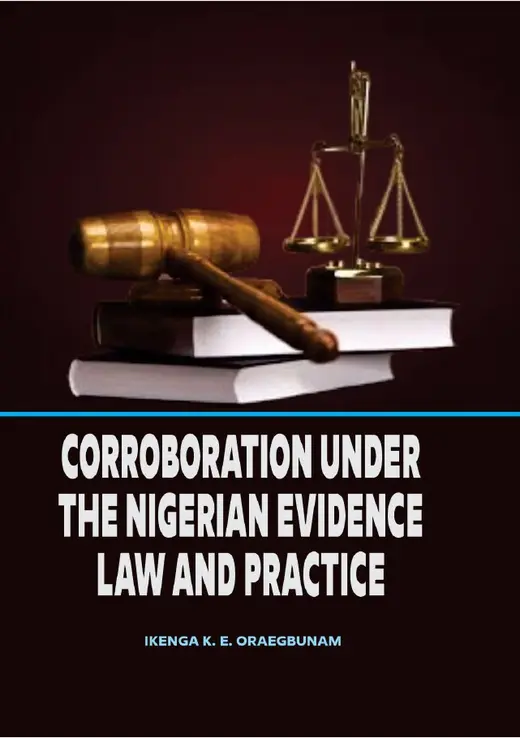
Corroboration under the Nigerian Evidence Law and Practice
About the monograph
The need for solid probative evidence cannot be dispensed with in every adversarial or accusatorial legal culture. According to this justice system, the disputing and opposing parties have to adduce sufficient evidence to prove their respective cases before independent and disinterested arbiter. Nigeria, due to its British colonial antecedents, inter alia, had to come into the web of this Anglo-American common law jurisprudence. However, the sufficiency of the evidence probative of a particular fact in issue has been a matter of evidence law and practice. It is the law and sometimes judicial practice that say whether or not a single credible and qualitative witness is enough to prove a case beyond reasonable doubt as in criminal justice or tilt the pendulum of the balance of probability in favour of a party in a civil suit. This study examines those cases in which the Evidence Act requires, among other factors, corroboration of the existing evidence for the prosecution or the plaintiff to succeed in his case. It also critically analyzes those instances in which the Nigerian court, as a matter of practice, expects independent evidence to corroborate the existing one for it to determine the issues in favour of the prosecution.
Cite this book
Ikenga K. E. Oraegbunam, Corroboration under the Nigerian Evidence Law and Practice (Ibadan University Press Pub. House, University of Ibadan, 2014), ISBN 978-978-63370-0-5.
Free preview
First 4 pagesLoading page…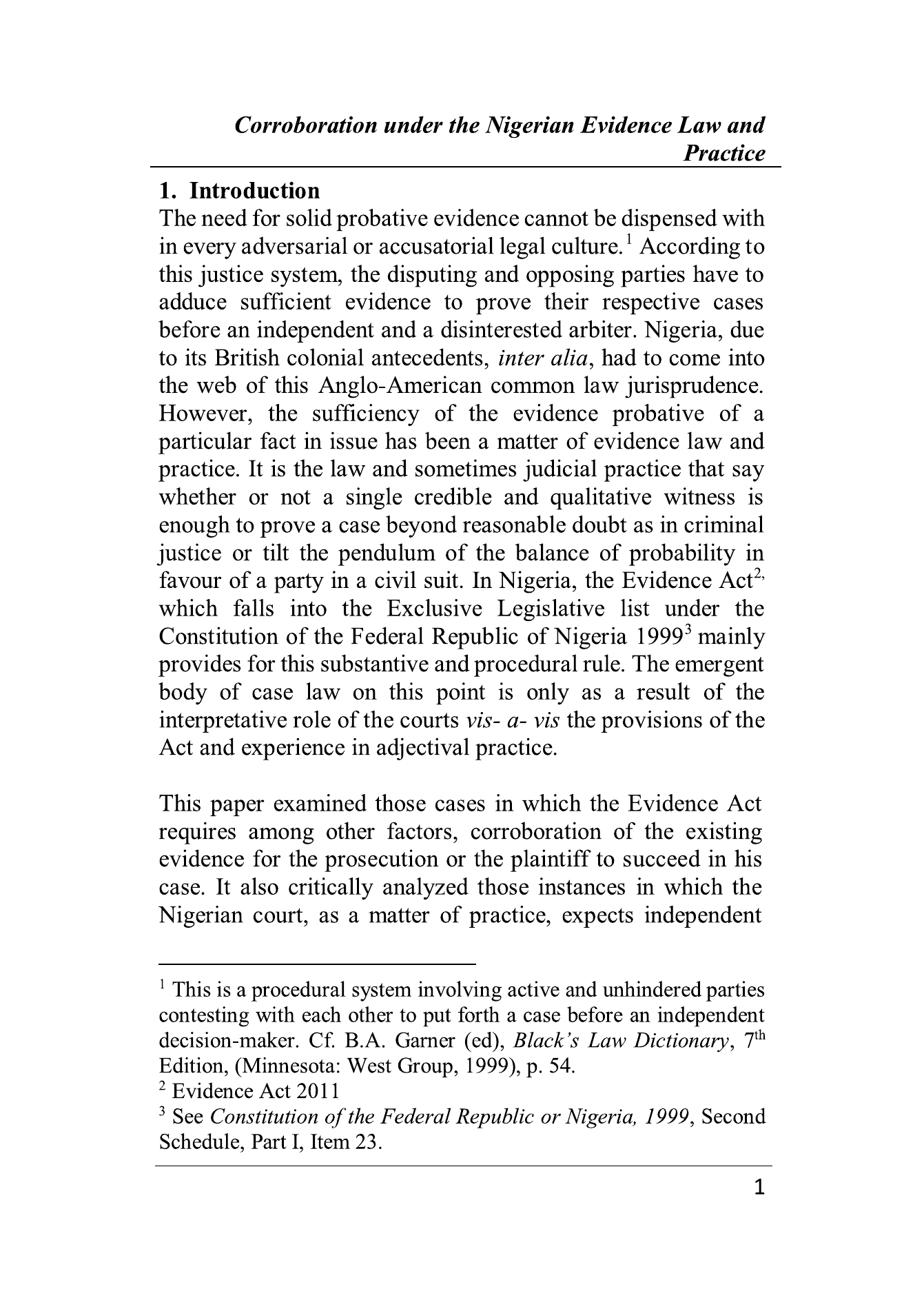
Loading page…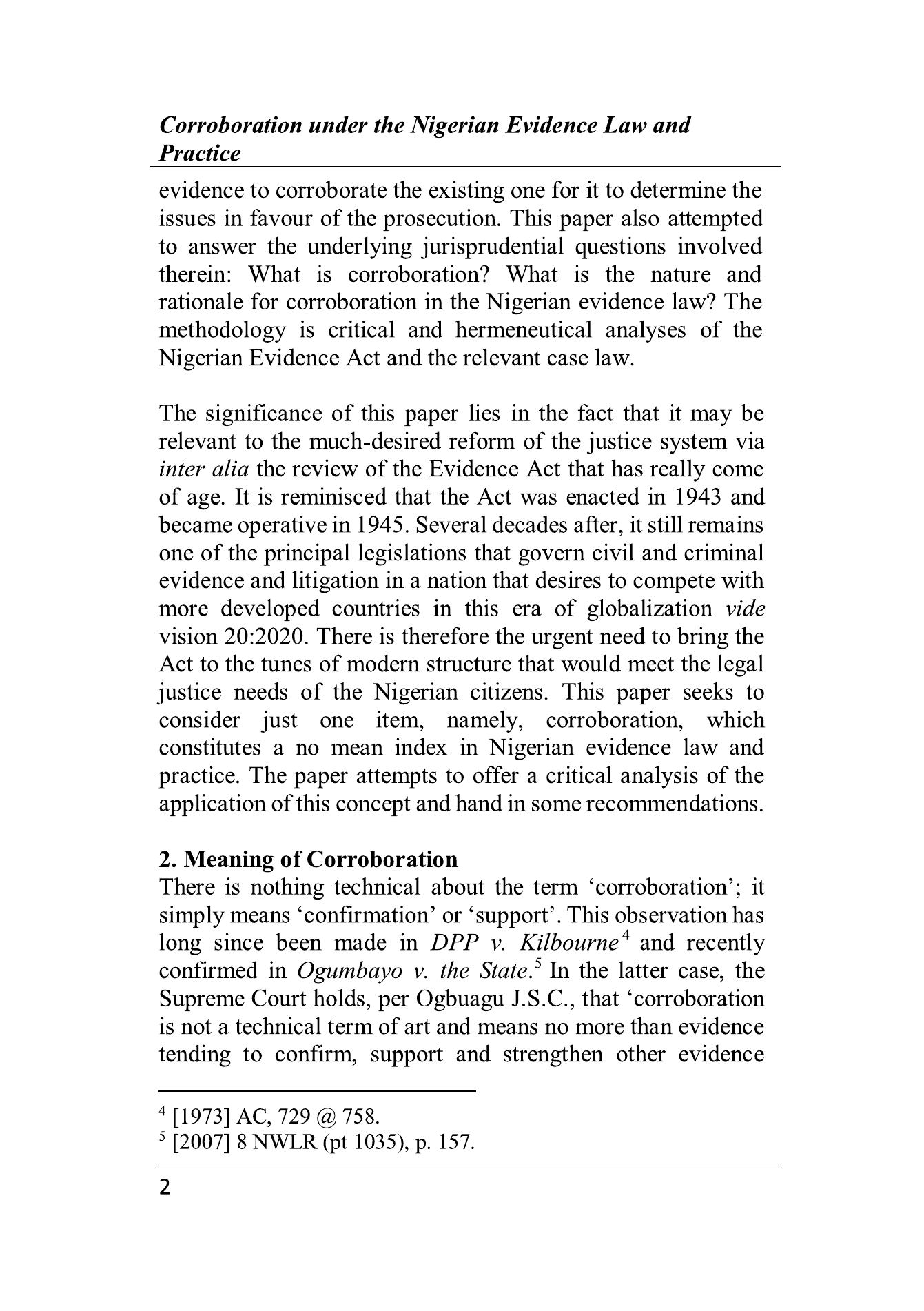
Loading page…
Loading page…
Keep reading
That was the free preview. 39 more pages in the full monograph, yours as a PDF for ₦7,000.