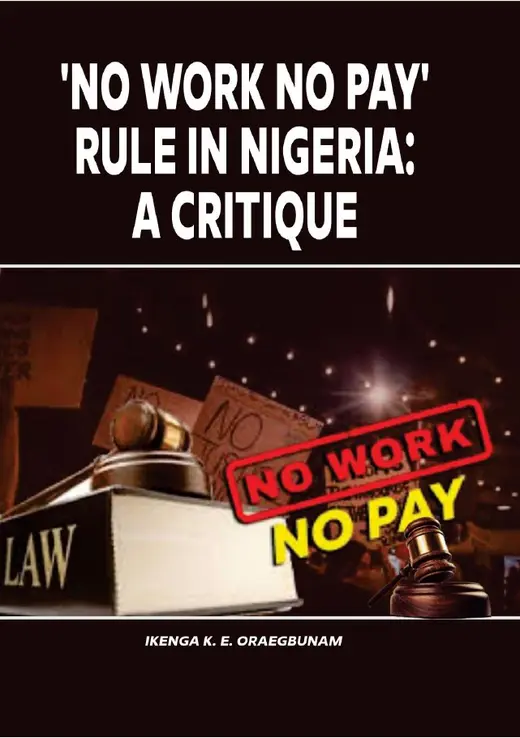
Opening the monograph…
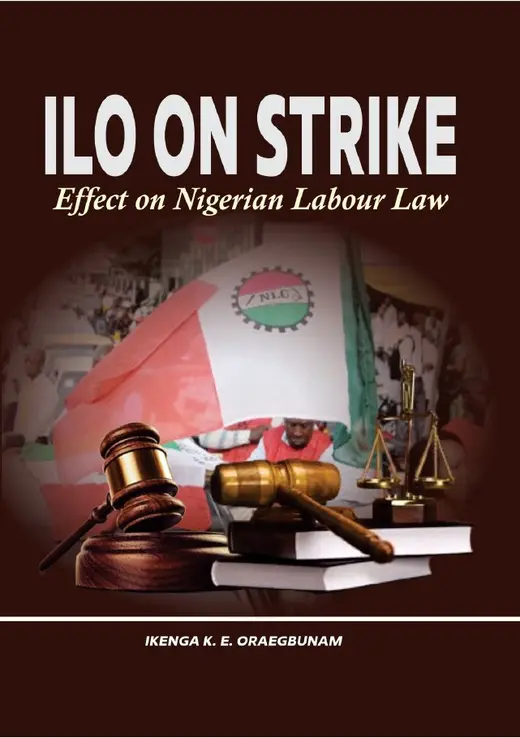
Commercial Law & Arbitration
ILO on Strike
Effect on Nigerian Labour Law
About the monograph
The right to strike remains a central yet contested element of labour law, particularly within the framework of international labour standards developed by the International Labour Organization (ILO). Although the ILO's core conventions, especially Convention No 87 and Convention No 98, do not expressly codify the right to strike, its supervisory bodies have consistently interpreted the right as an essential component of freedom of association and collective bargaining. This study critically appraises the ILO's position on the right to strike, examining its doctrinal foundation, scope, permissible limitations, and evolving jurisprudence, while also assessing its implications for Nigeria's labour law regime. Adopting a doctrinal and comparative methodology, the study analyses the divergence between ILO principles and Nigeria's statutory framework, particularly under the Trade Disputes Act and Trade Unions Act, which impose extensive procedural constraints and sanctions on strike action. The study finds that Nigeria's restrictive approach undermines the effectiveness of collective bargaining, weakens workers' rights, and raises concerns regarding compliance with international labour standards. Drawing comparative insights from jurisdictions such as the United Kingdom, South A frica, and Canada, the work concludes that meaningful reform, legislative, constitutional, and judicial, is necessary to align Nigeria's labour laws with contemporary international best practice and to promote a more balanced system of industrial relations.
Cite this book
Ikenga K. E. Oraegbunam, ILO on Strike: Effect on Nigerian Labour Law (TETFund Academic Publishing Centre, Nnamdi Azikiwe University, 2026), ISBN 978-978-63774-4-5.
Free preview
First 4 pagesLoading page…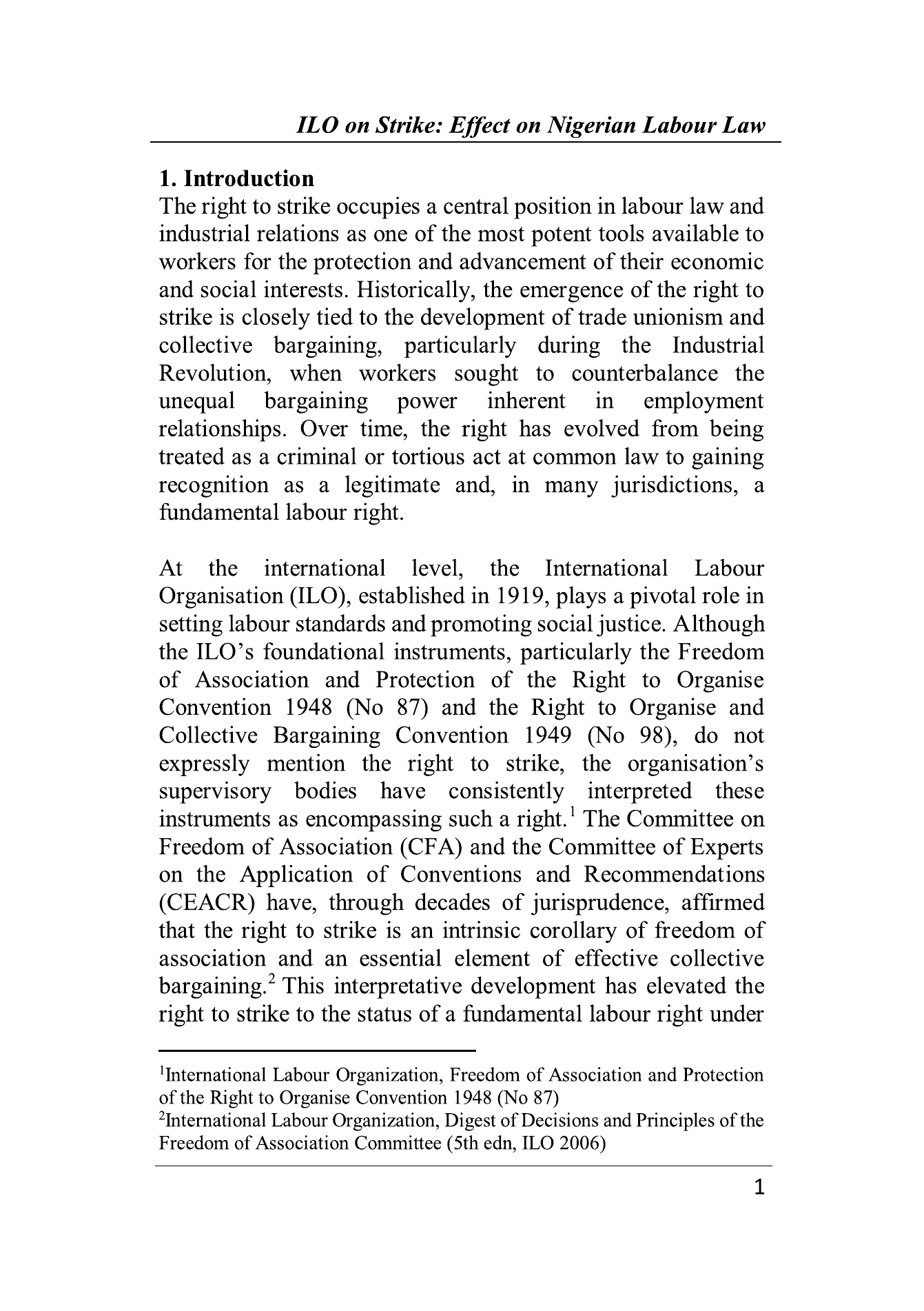
Loading page…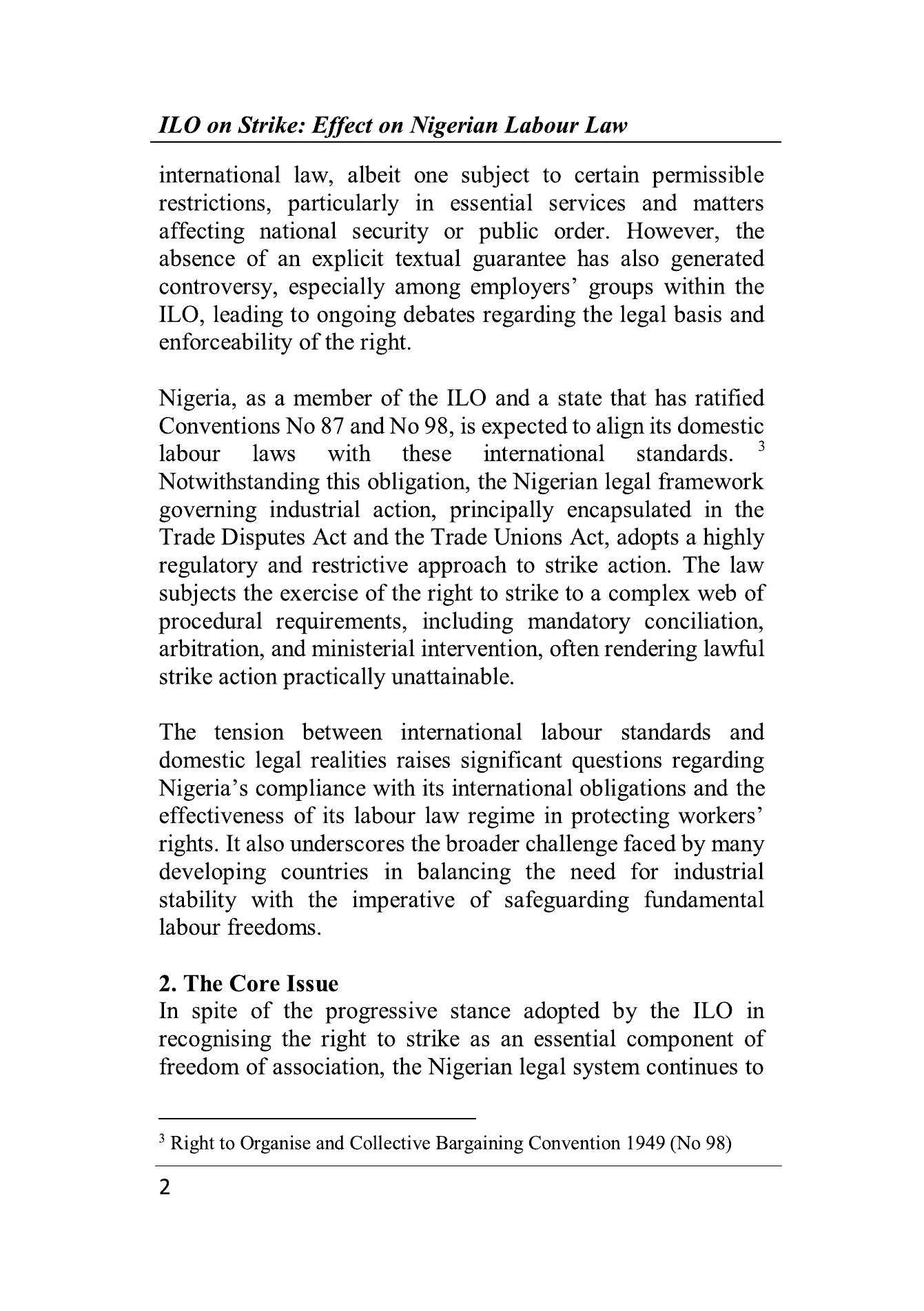
Loading page…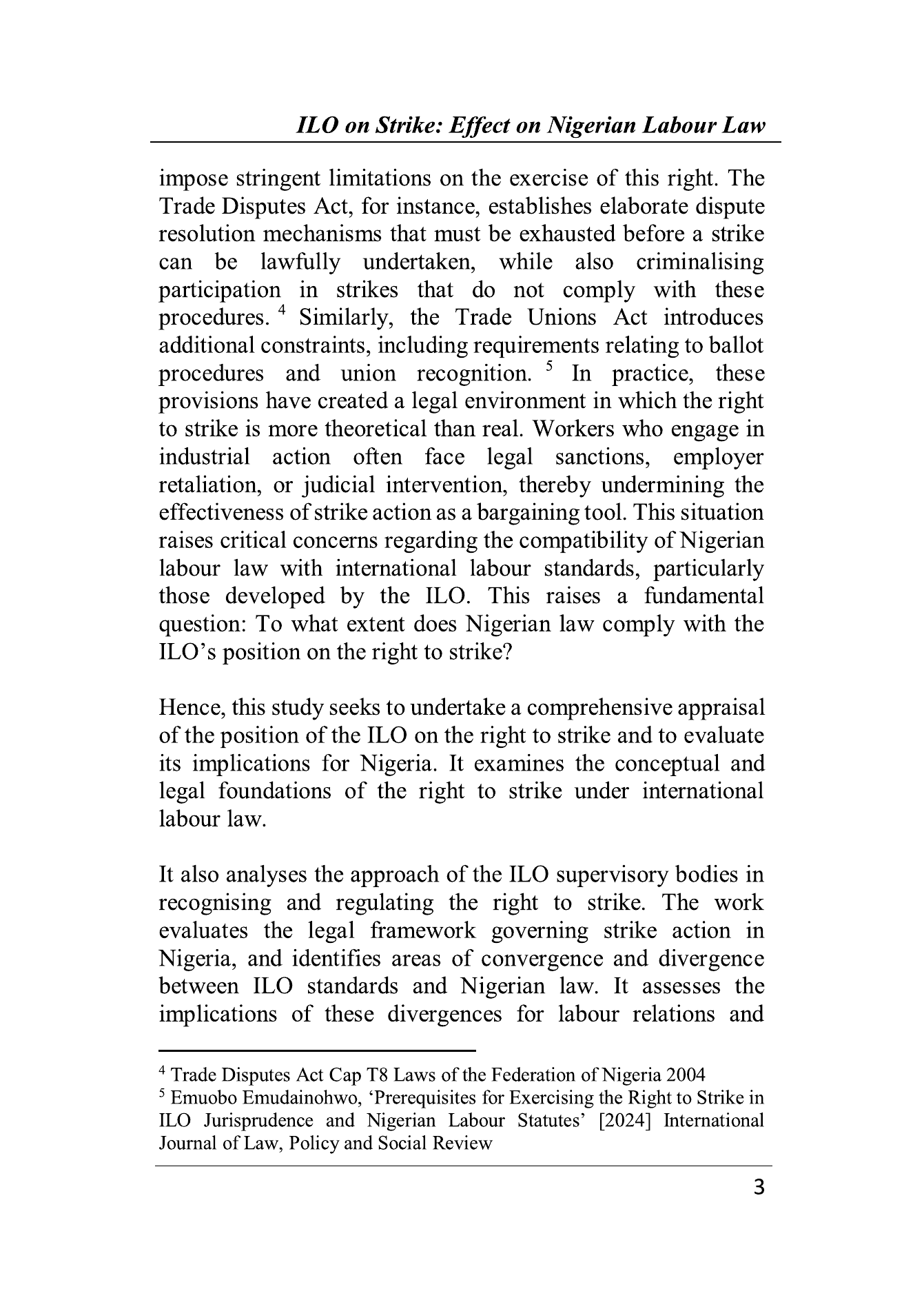
Loading page…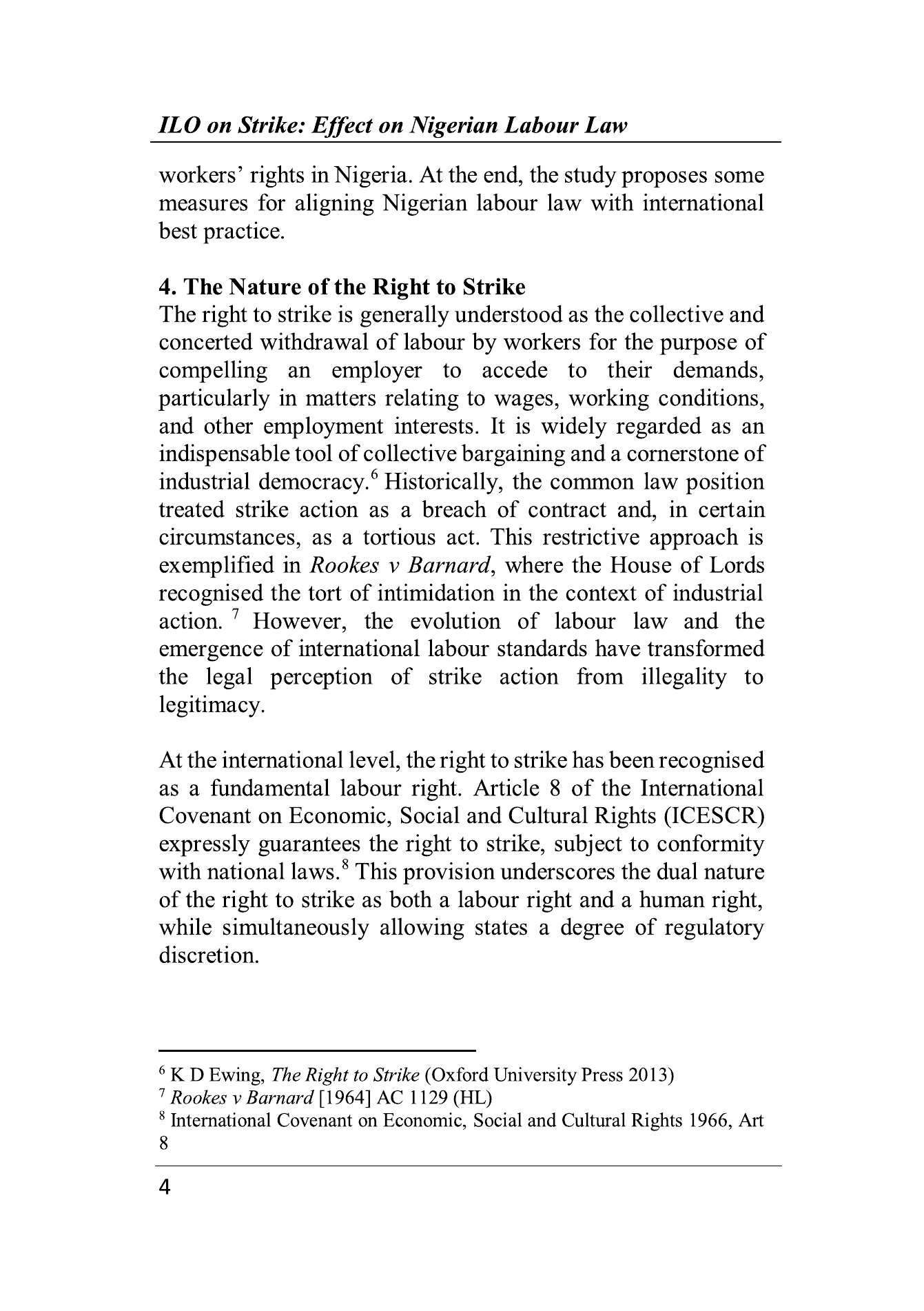
Keep reading
That was the free preview. 28 more pages in the full monograph, yours as a PDF for ₦7,000.