Opening the monograph…
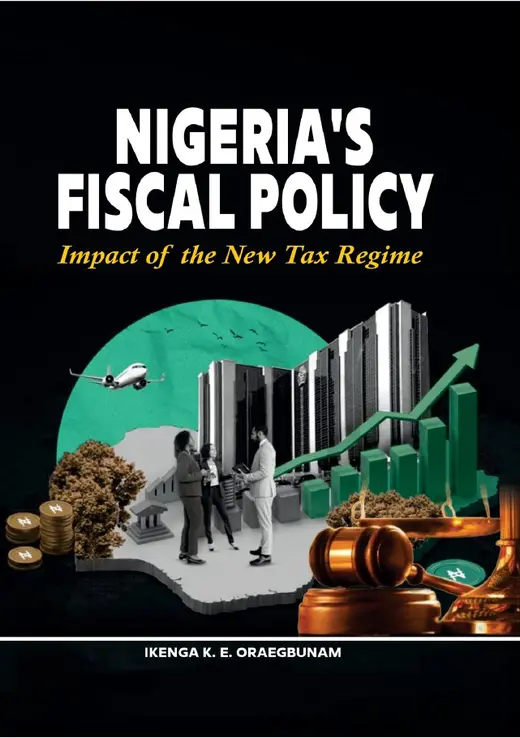
Commercial Law & Arbitration
Nigeria's Fiscal Policy
Impact of the New Tax Regime
About the monograph
Nigeria's fiscal landscape has undergone significant legislative transformation since 2019, driven by a succession of Finance Acts and, most ambitiously, Nigeria Tax Act 2025. Collectively, these instruments constitute the most sweeping revision of Nigeria's tax laws since the Companies Income Tax Act of 1979, seeking to modernise the fiscal framework, broaden the revenue base, and align Nigeria's tax system with international best practice in an era of digital commerce and global minimum taxation. This study examines the implications of this new tax regime on Nigeria's fiscal policy, analysing legislative innovations across corporate income tax, value added tax, digital economy taxation, and personal income tax, as well as the structural reforms under the extant legislation. Grounded in Musgrave's tripartite theory of fiscal functions, the work demonstrates that while the reforms represent a commendable effort to diversify government revenue and reduce petroleum dependency, their efficacy is constrained by implementation deficits, intergovernmental fiscal tensions, and structural weaknesses in tax administration. The analysis proceeds from a rigorous distinction between the law de /ege lata and the law de lege ferenda, concluding that the new tax regime's fiscal policy objectives demand not merely legislative reform but a complementary programme of institutional capacity development, constitutional clarification, and public trust-building.
Cite this book
Ikenga K. E. Oraegbunam, Nigeria's Fiscal Policy: Impact of the New Tax Regime (TETFund Academic Publishing Centre, Nnamdi Azikiwe University, 2026), ISBN 978-978-8590-28-6.
Free preview
First 4 pagesLoading page…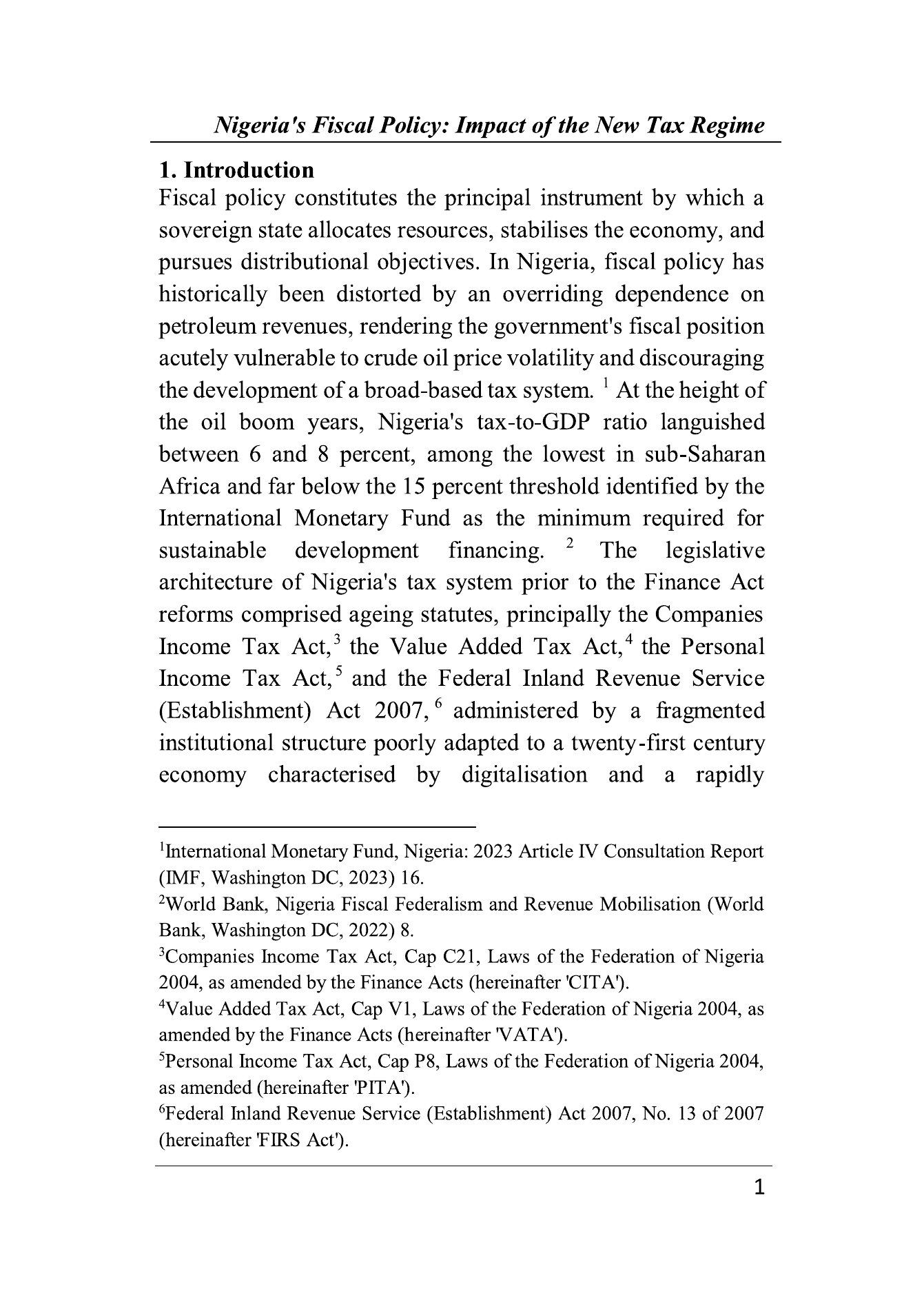
Loading page…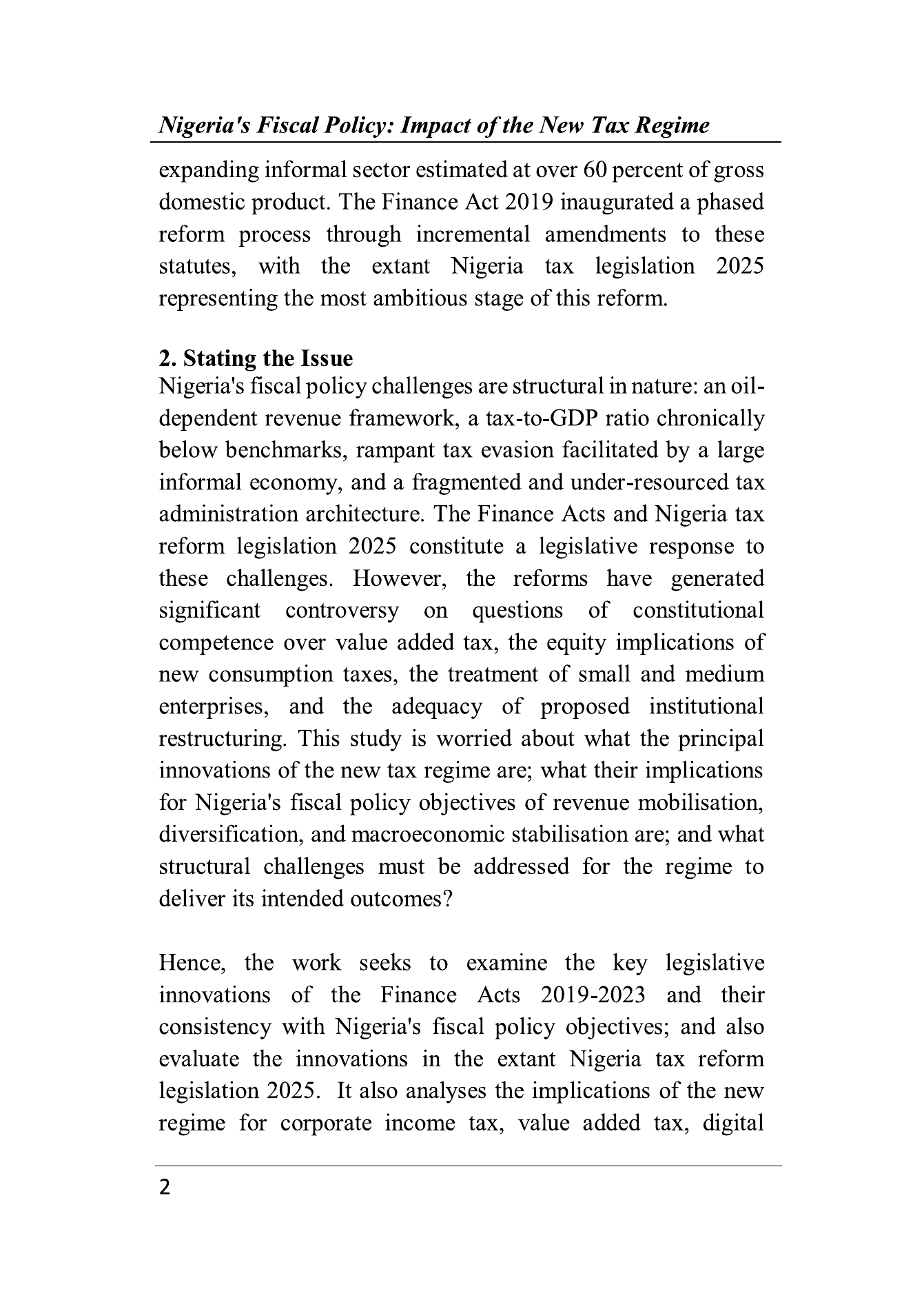
Loading page…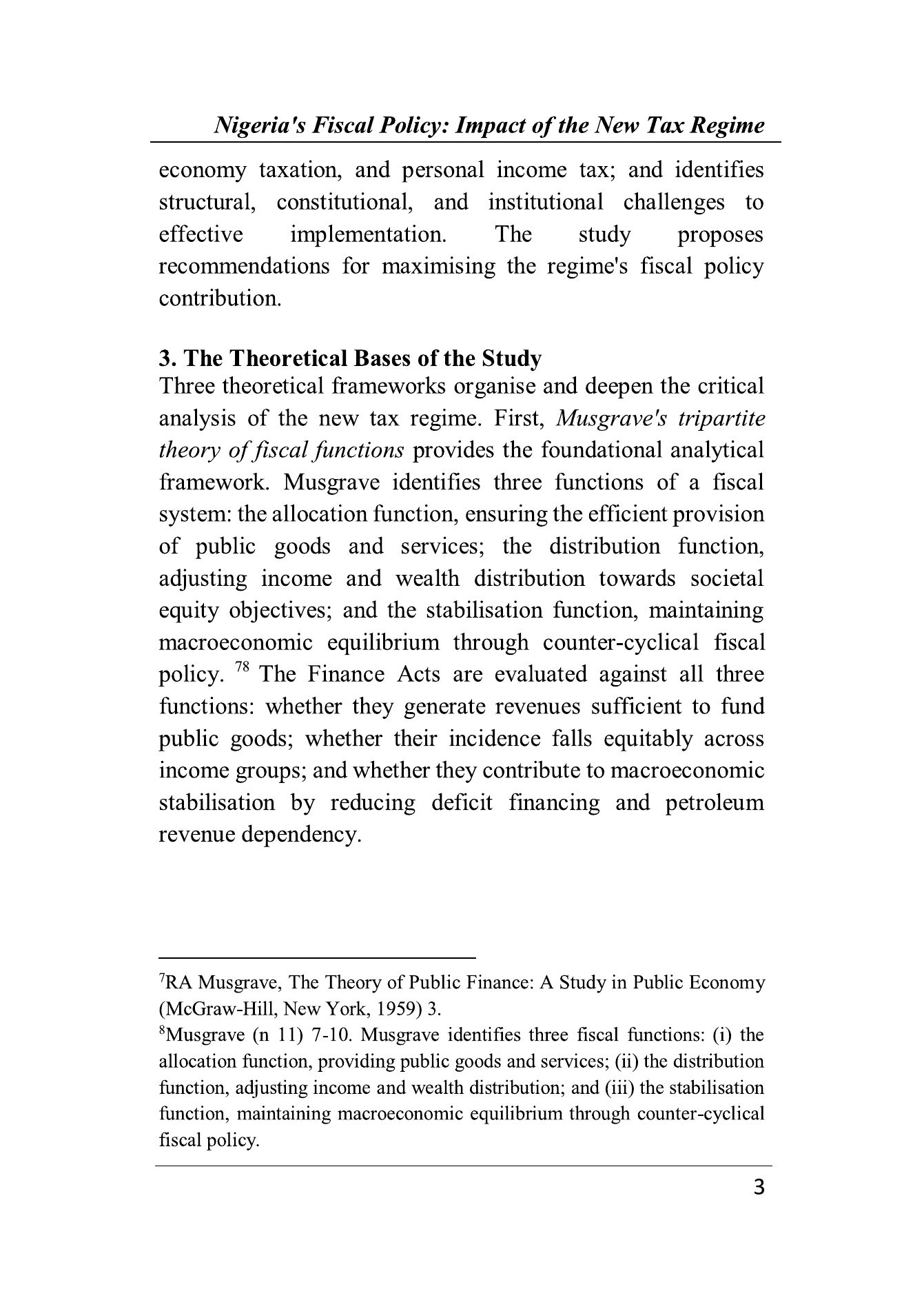
Loading page…
Keep reading
That was the free preview. 20 more pages in the full monograph, yours as a PDF for ₦7,000.