Opening the monograph…
Commercial Law & Arbitration
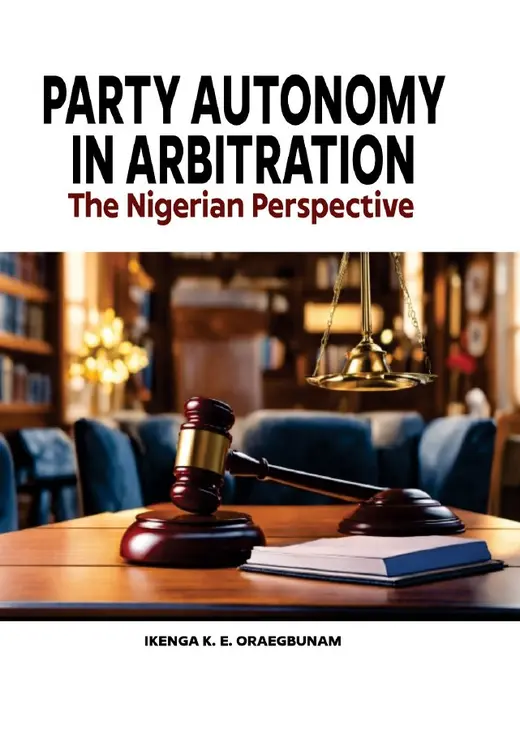
Party Autonomy in Arbitration
The Nigerian Perspective
About the monograph
Party autonomy is a vital element of arbitration. It fundamentally distinguishes private dispute resolution from traditional court litigation by allowing disputing parties to design and control their own adjudicatory process. This study conducts a comprehensive legal analysis of the scope, application and limitations of party autonomy within the Nigerian arbitration regime, especially the Arbitration and Mediation Act 2023. It found that the Arbitration and Mediation Act 2023 heavily protects the freedom of parties to choose their arbitrators, procedural rules, seat of arbitration and substantive law. Furthermore, the judiciary consistently demonstrates a highly supportive attitude towards enforcing private arbitration agreements. However, the findings establish that this autonomy is not absolute. The freedom of the parties is subject to state restrictions based on the doctrine of arbitrability, mandatory statutory provisions and strict public policy considerations. Based on the findings, this work recommends continuous specialized training for judicial officers to sustain their non-interventionist approach during arbitral proceedings. It also strongly suggests that the legislature should provide a clear statutory outline ofnon-arbitrable matters to guide disputing parties and prevent the waste of resources on inyalid arbitration agreements and processes.
Cite this book
Ikenga K. E. Oraegbunam, Party Autonomy in Arbitration: The Nigerian Perspective (Pan-Atlantic University Press, 2024), ISBN 978-978-63773-2-2.
Free preview
First 4 pagesLoading page…
Loading page…
Loading page…
Loading page…
Keep reading
That was the free preview. 20 more pages in the full monograph, yours as a PDF for ₦7,000.