Opening the monograph…
Commercial Law & Arbitration
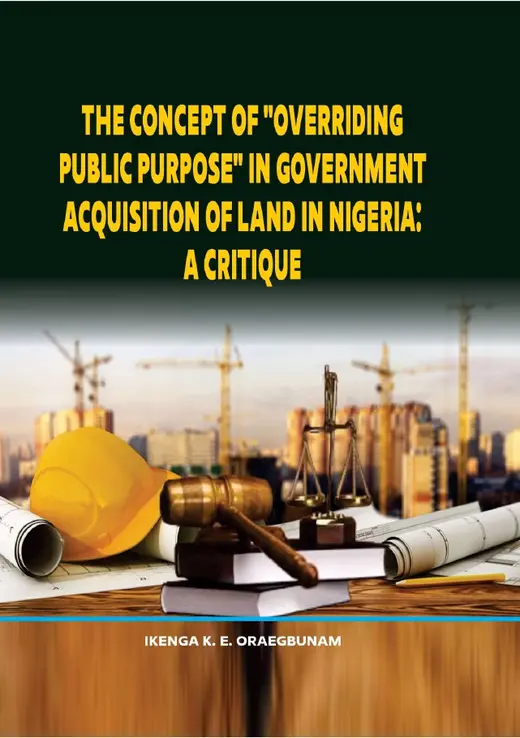
The Concept of "Overriding Public Purpose" in Government Acquisition of Land in Nigeria
A Critique
About the monograph
The doctrine of ‘overriding public purpose’ occupies a central yet contested role in Nigeria's land law, serving as the legal justification for government acquisition of private land under the Land Use Act 1978. This study critically examines the framework governing compulsory acquisition, with particular attention to the scope, application, and judicial interpretation of overriding public purpose. Employing a doctrinal methodology, the study analyses statutory provisions, case law, and scholarly commentary to evaluate the balance between developmental imperatives and the protection of property rights. Findings reveal that while the doctrine aligns with utilitarian and public trust principles, its broad and indeterminate definition, extensive executive discretion, procedural irregularities, and shortcomings in compensation, create uncertainty, opportunities for abuse, and socio-economic challenges for affected communities. Comparative insights from the United Kingdom and South Africa bring to light alternative approaches that emphasise procedural clarity, judicial oversight, and context-sensitive compensation. The study recommends that Nigeria's framework would benefit from reforms clarifying the definitional scope of overriding public purpose, strengthening procedural safeguards and consultation requirements, institutionalising fair compensation, and enhancing judicial scrutiny over executive action, thereby ensuring that developmental objectives are balanced with the protection of individual land rights.
Cite this book
Ikenga K. E. Oraegbunam, The Concept of "Overriding Public Purpose" in Government Acquisition of Land in Nigeria: A Critique (TETFund Academic Publishing Centre, Nnamdi Azikiwe University, 2026), ISBN 978-978-8590-01-9.
Free preview
First 4 pagesLoading page…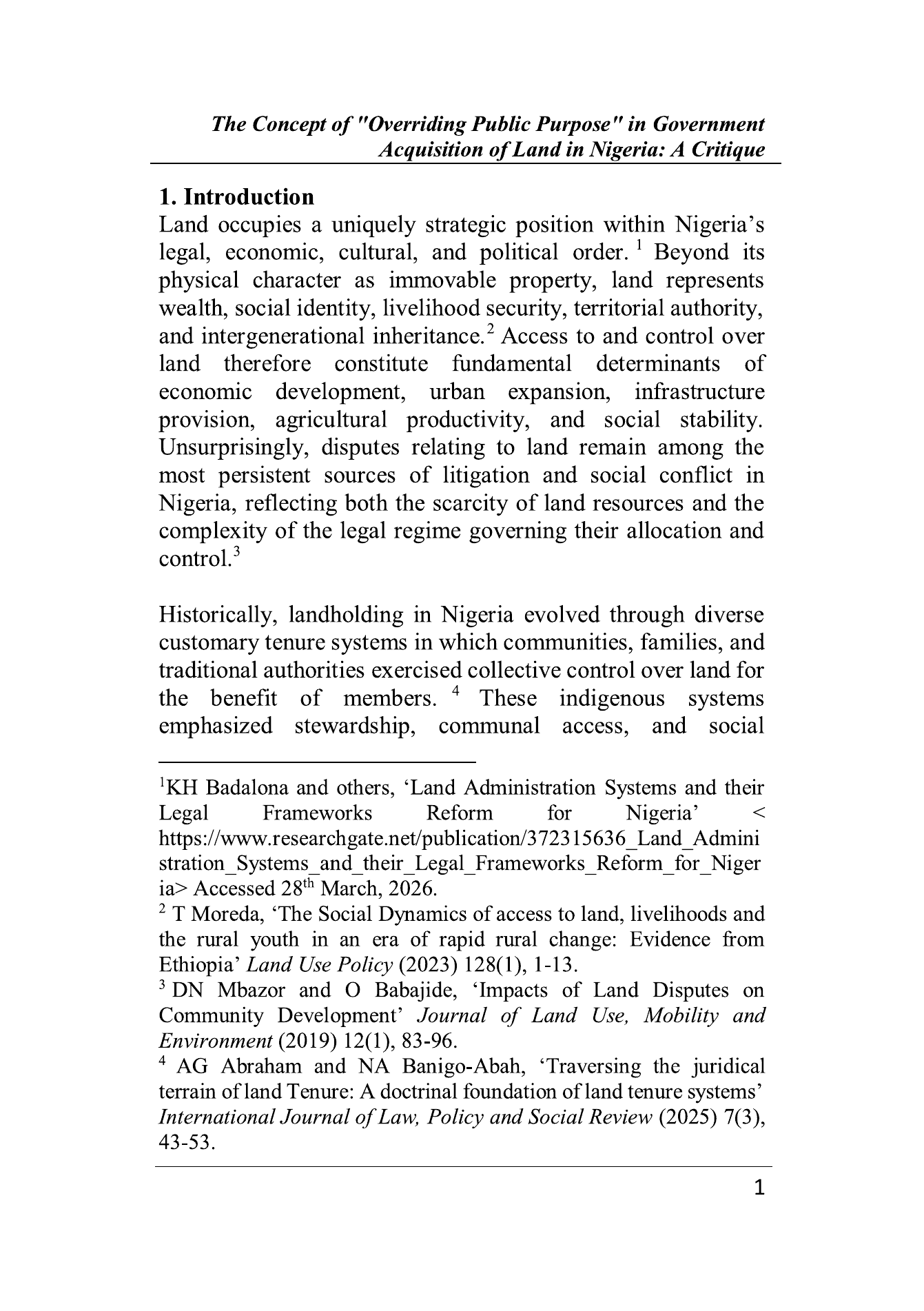
Loading page…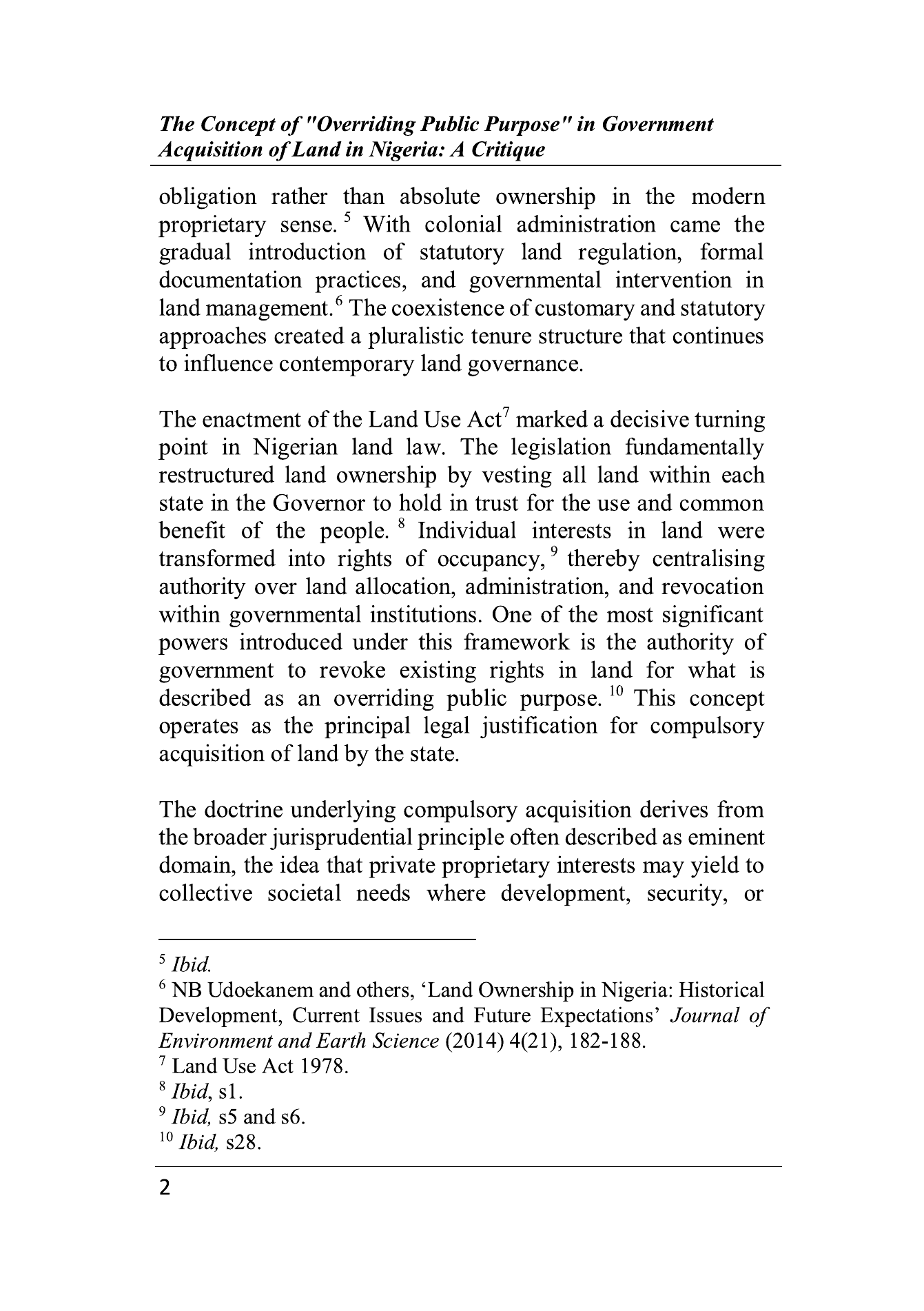
Loading page…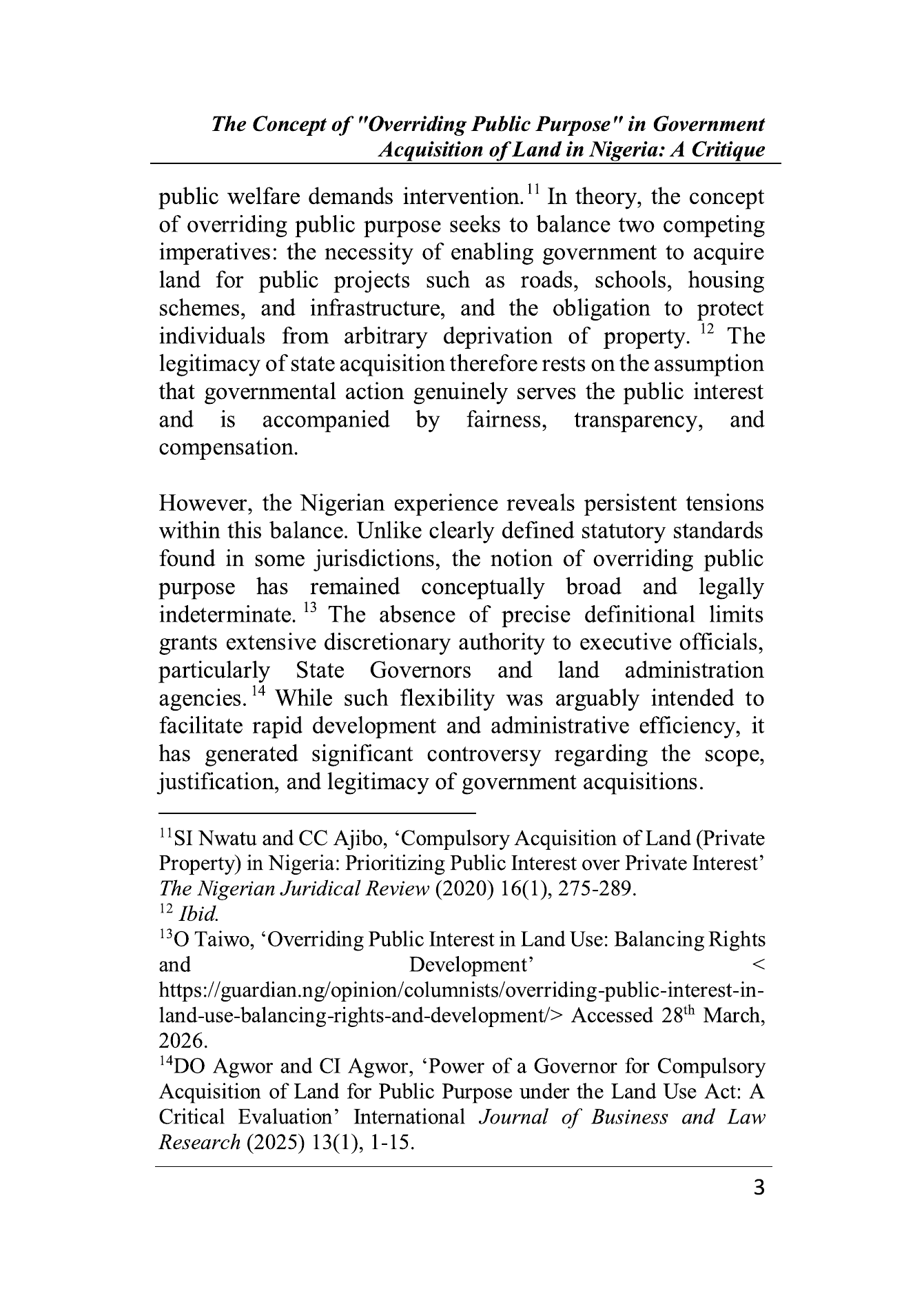
Loading page…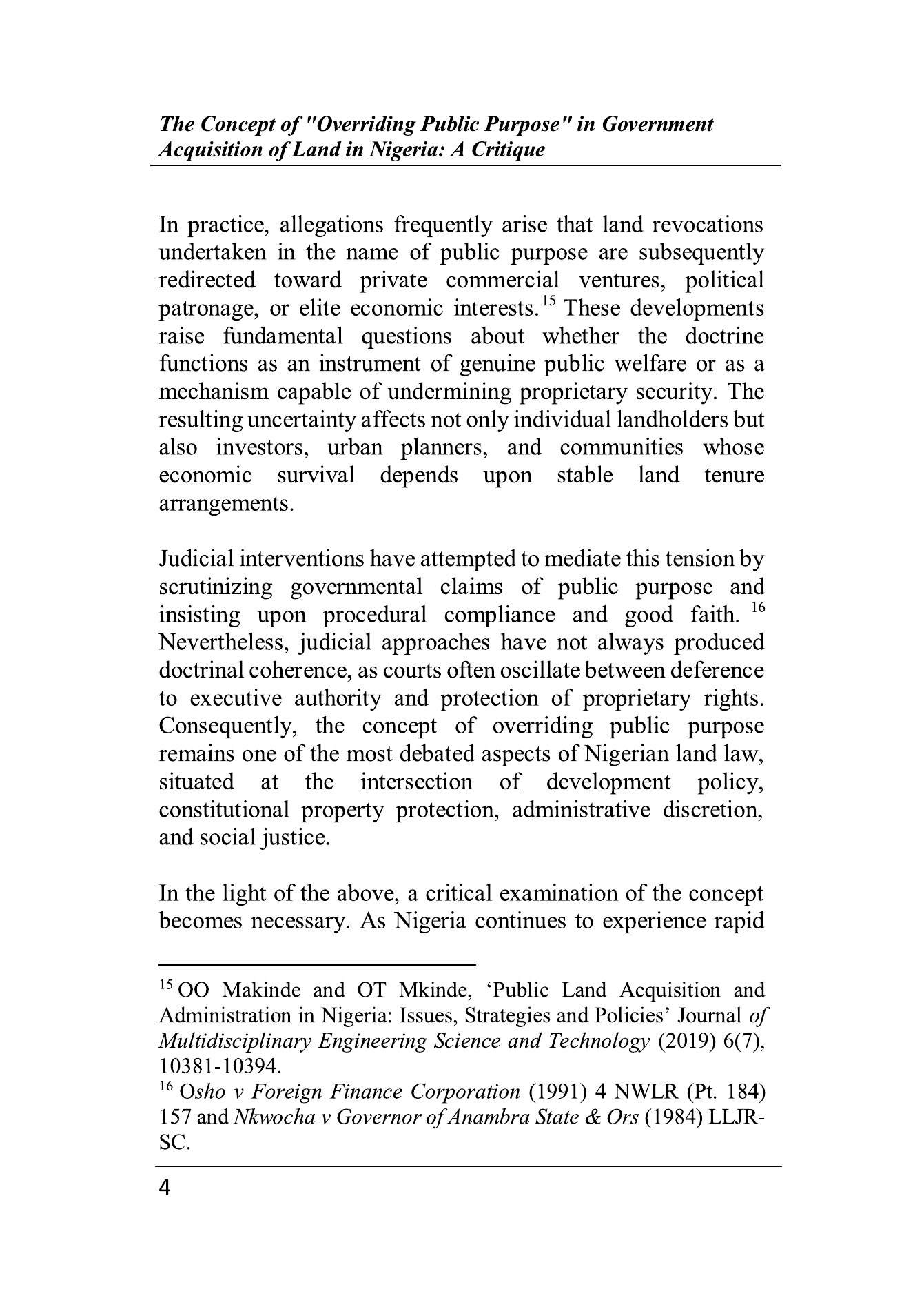
Keep reading
That was the free preview. 30 more pages in the full monograph, yours as a PDF for ₦7,000.