Opening the monograph…
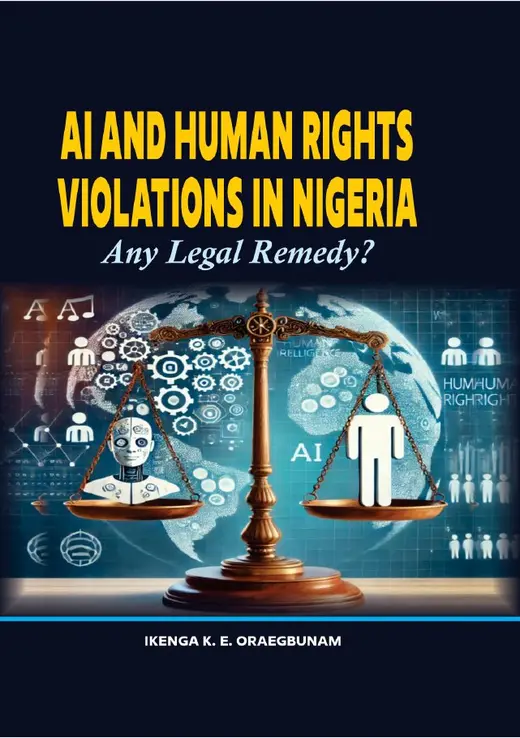
Technology, Cyber & AI
AI and Human Rights Violations in Nigeria
Any Legal Remedy?
About the monograph
Artificial Intelligence (AI) systems are generating documented human rights violations at a pace that outstrips the capacity of existing legal frameworks to identify, attribute, and remedy them. In Nigeria, where AI tools are increasingly deployed in financial services, employment, public administration, and law enforcement, the legal landscape for victims of algorithmic harm is deeply inadequate. The constitutional rights framework, the Nigerian Data Protection Act 2023, and the country's tortious remedies were designed for a world in which harm is caused by identifiable human actors operating within legible institutional structures. AI challenges each of those assumptions simultaneously. This work examines the types of human rights violations that AI systems generate, evaluates the adequacy of existing Nigerian, and international legal frameworks as remedial instruments, and confronts what it terms the attribution and accountability gap. This is the structural problem that when an AI system causes harm, responsibility is distributed across developers, deployers, and the state in ways that no existing legal framework in Nigeria is equipped to manage. Drawing on the UN Guiding Principles on Business and Human Rights as an analytical backbone, the study argues that finding the legal remedy for Al-driven human rights violations in Nigeria requires not merely interpretation of existing instruments but deliberate legislative and institutional reform. Several specific interventions are proposed, grounded in what is achievable within Nigeria's existing constitutional and institutional framework.
Cite this book
Ikenga K. E. Oraegbunam, AI and Human Rights Violations in Nigeria: Any Legal Remedy? (TETFund Academic Publishing Centre, Nnamdi Azikiwe University, 2026), ISBN 978-978-8590-36-1.
Free preview
First 4 pagesLoading page…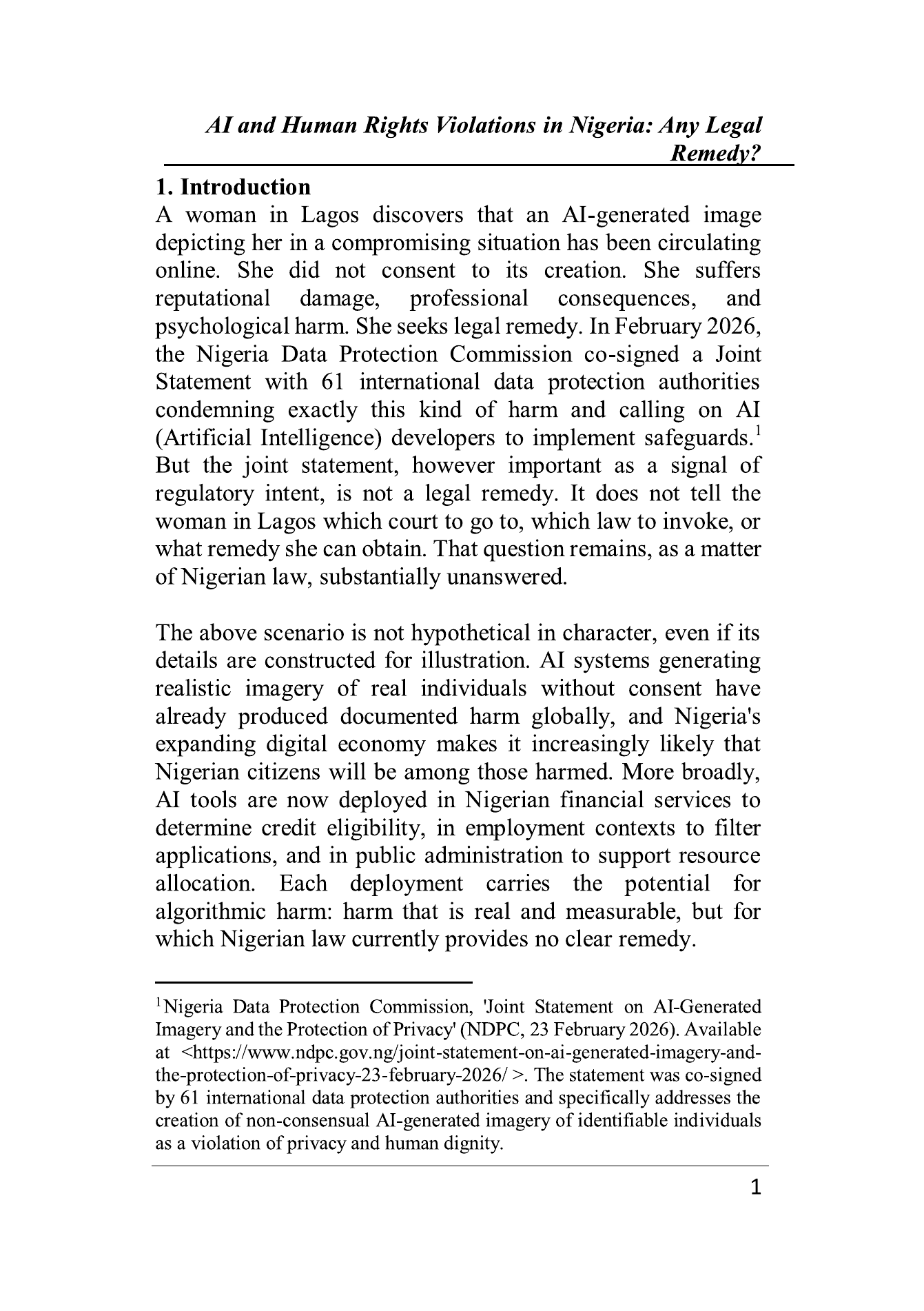
Loading page…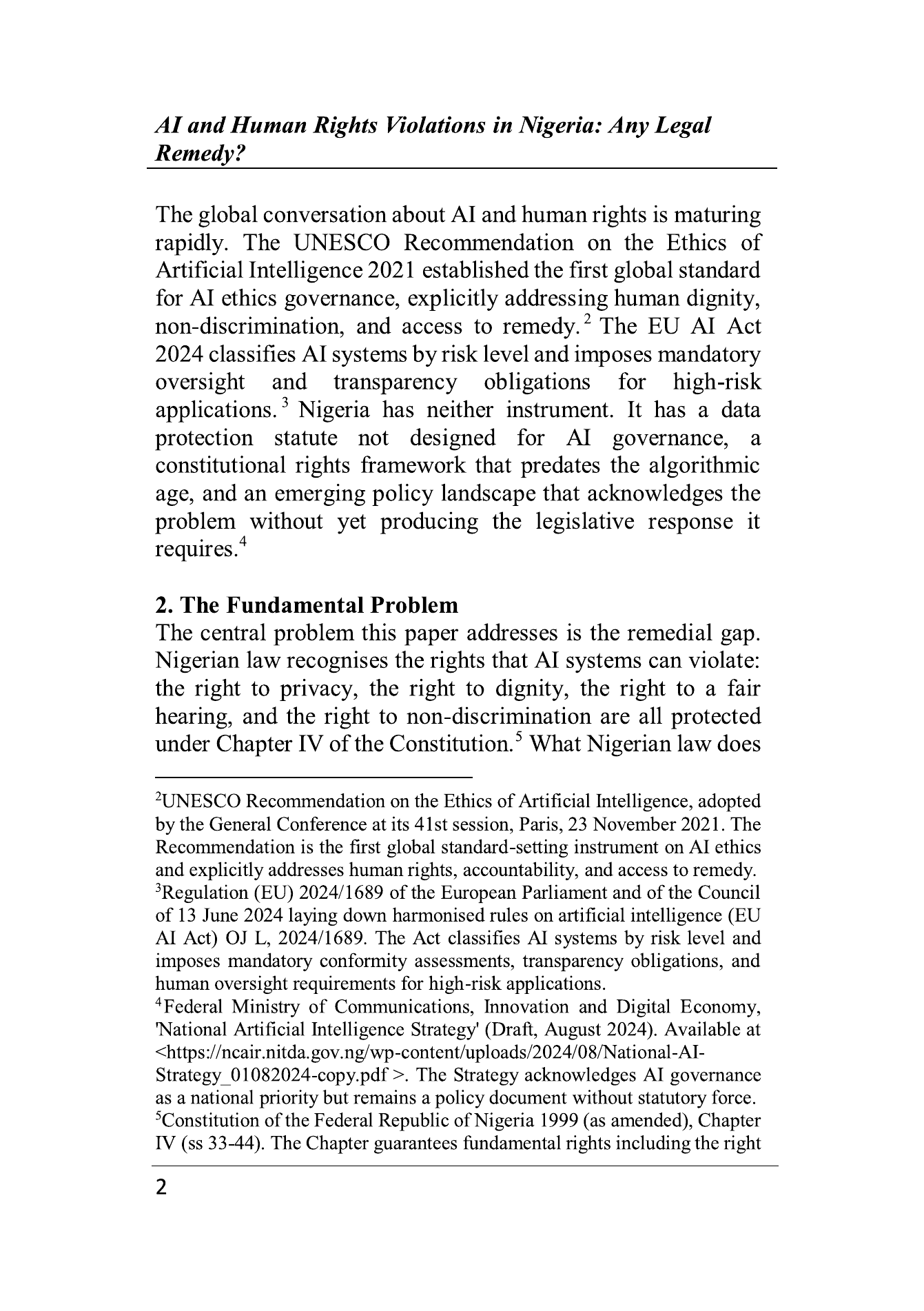
Loading page…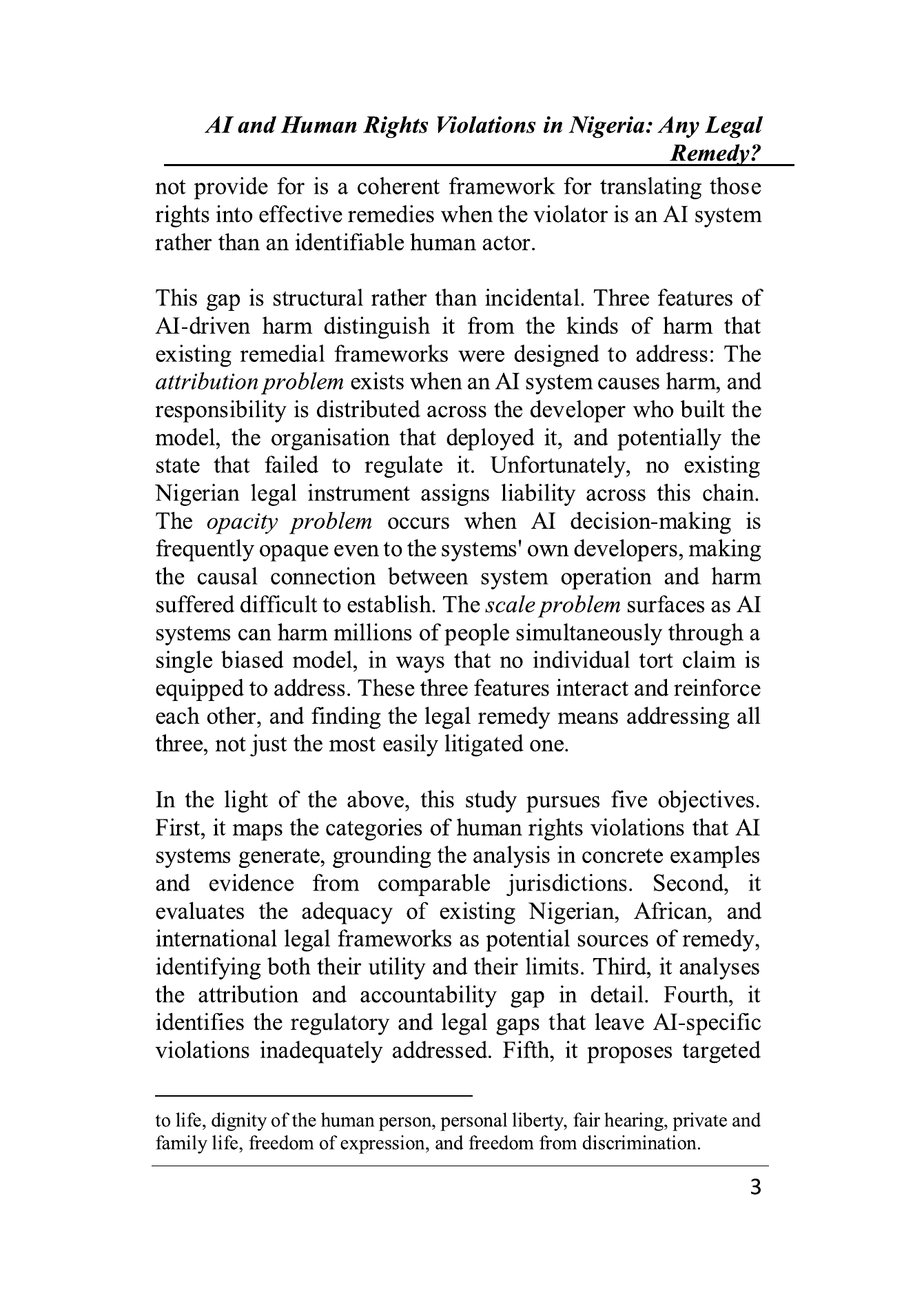
Loading page…
Keep reading
That was the free preview. 31 more pages in the full monograph, yours as a PDF for ₦7,000.