Opening the monograph…
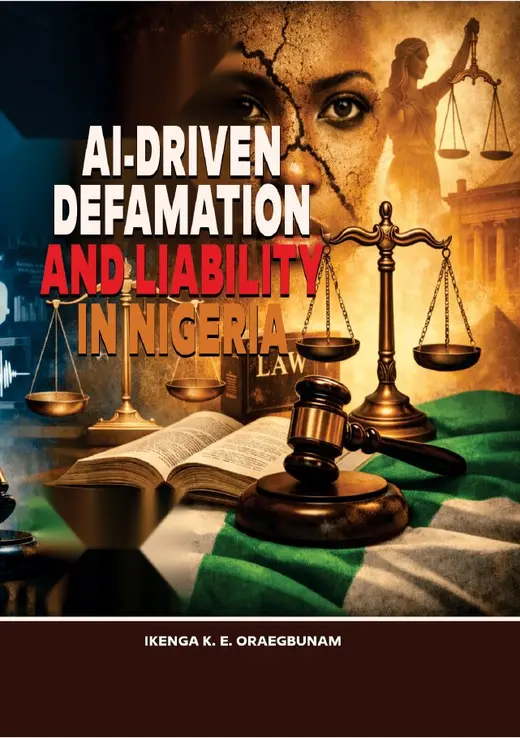
Technology, Cyber & AI
AI-Driven Defamation and Liability in Nigeria
About the monograph
Artificial Intelligence systems now generate and disseminate contents capable of destroying individual reputations. Large language models fabricate false accusations; deepfake tools synthesise fabricated scandals; I recommendation algorithms amplify defamatory material far beyond the reach of traditional media. Nigerian defamation law, rooted in common law principles crafted for human speakers and physical publications, confronts these phenomena with tools that are structurally inadequate. This work undertakes an examination of AI-driven defamation and the resultant liability vacuum within Nigeria's legal order. It maps four distinct modalities of algorithmic defamation (language model hallucinations, synthetic media, algorithmic amplification, and autonomous agent speech) and demonstrates that the existing architecture of liability, built around concepts of human authorship, publication, and fault, cannot identify a legally responsible actor. The Cybercrimes Act 2015, the Nigeria Data Protection Act 2023, and the #7 common law of libel, each rests on assumptions of human agency that fail when a defamatory statement is produced and propagated by an opaque, self-learning model. Comparative models from the European Union, the United Kingdom, Canada, and the African Union reveal partial solutions that cannot simply be transplanted without adaptation to Nigeria's constitutional I and technological contexts. The central finding is that Nigeria's liability vacuum weaponises automation. A defamatory falsehood generated by an AI can circulate indefinitely, causing irreparable harm, while no individual or entity bears legal responsibility. The study concludes that piecemeal judicial adaptation is insufficient and recommends a statutory tiered liability framework comprising a new definition of Al-generated publication, conditional immunity for neutral infrastructure, strict liability for curated _ content, a notice-and-expedited-correction mechanism, joint and several liability for reckless training practices, and mandatory algorithmic audit coupled with reputation-harm insurance.
Cite this book
Ikenga K. E. Oraegbunam, AI-Driven Defamation and Liability in Nigeria (Imo State University Press, Imo State University, Owerri, Nigeria, 2026), ISBN 978-978-8590-51-4.
Free preview
First 4 pagesLoading page…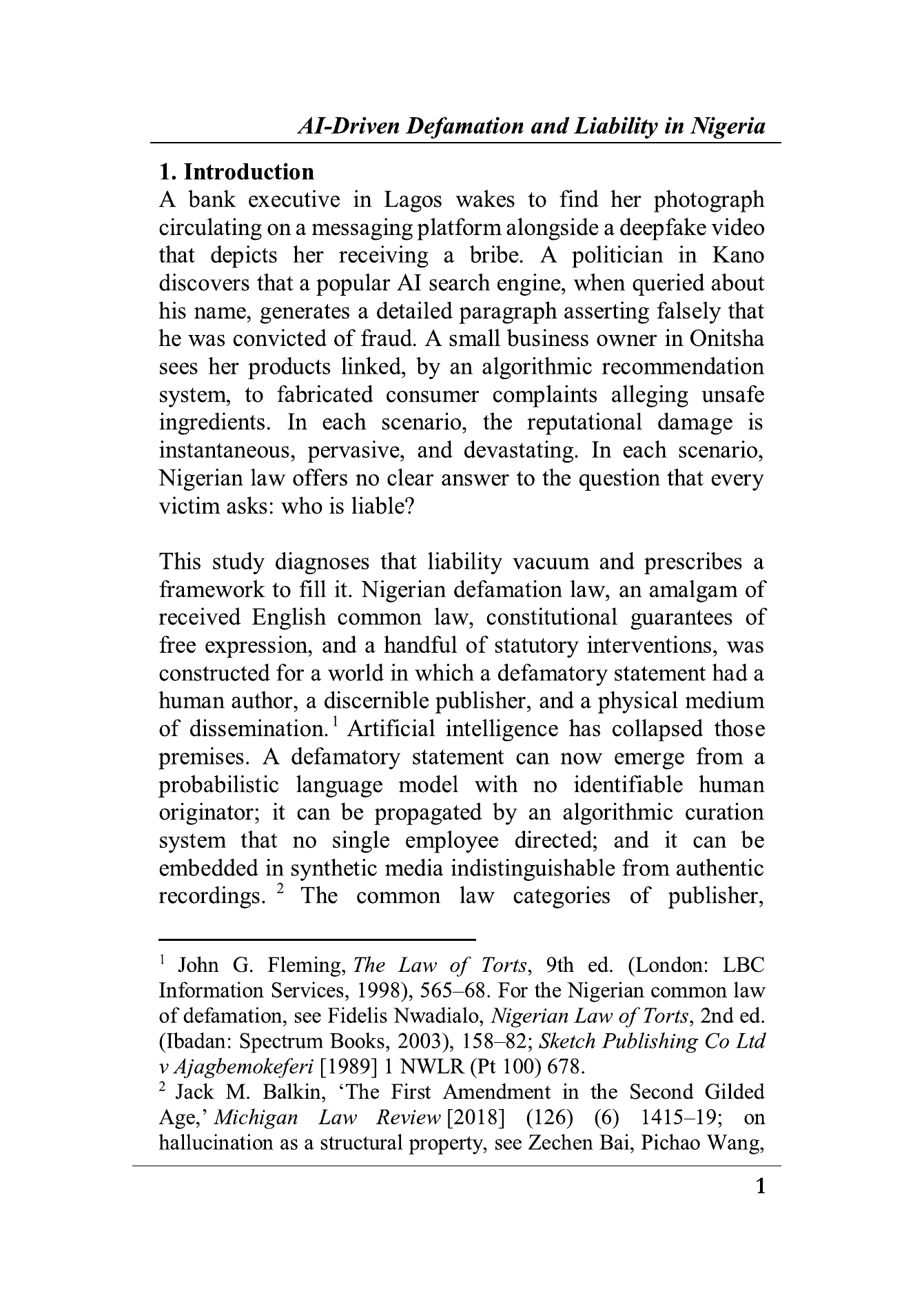
Loading page…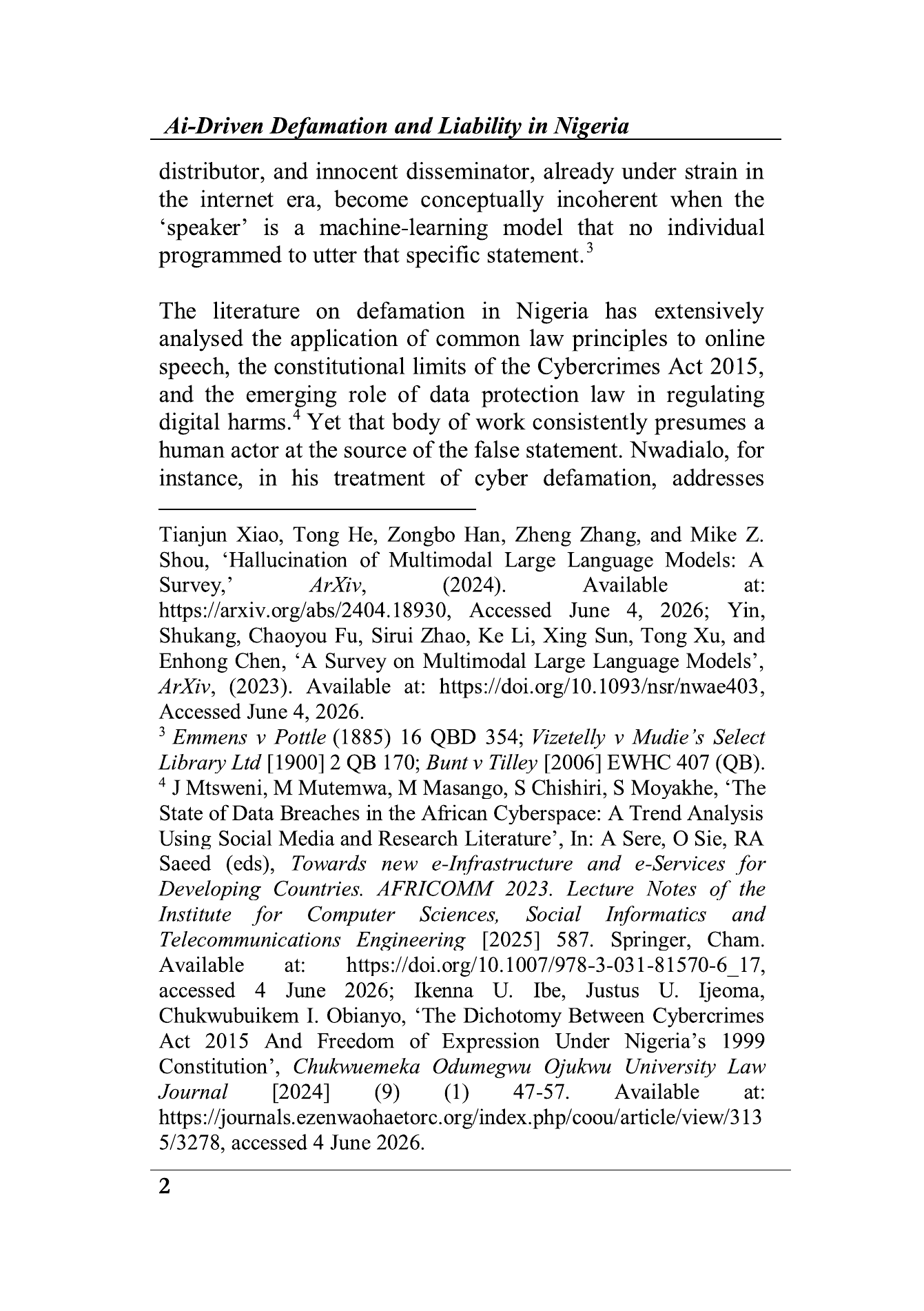
Loading page…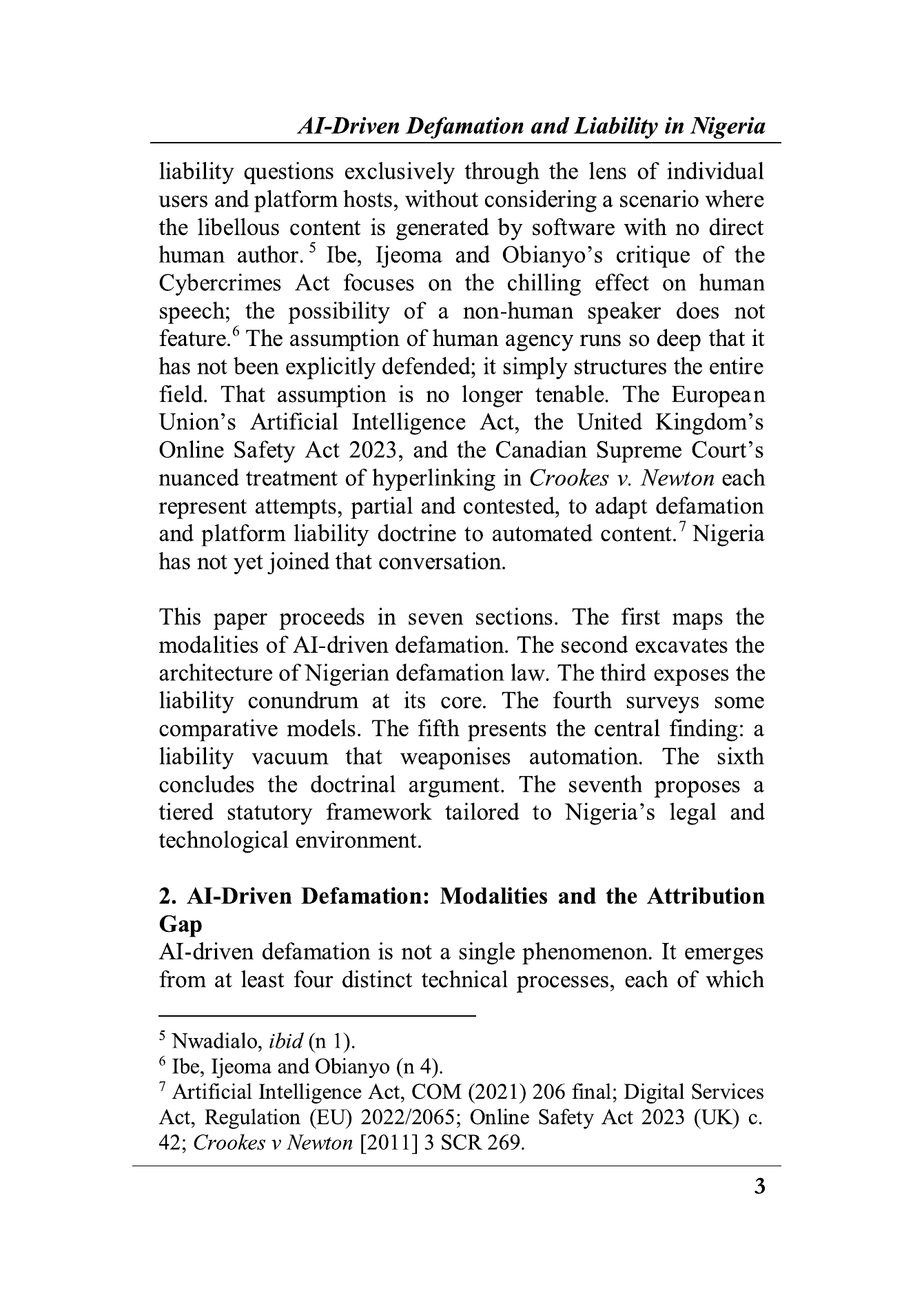
Loading page…
Keep reading
That was the free preview. 28 more pages in the full monograph, yours as a PDF for ₦7,000.