Opening the monograph…
International & Environmental Law
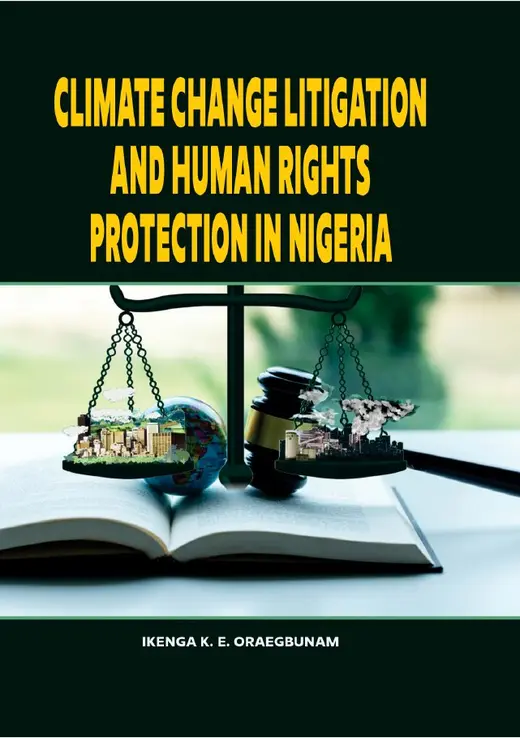
Climate Change Litigation and Human Rights Protection in Nigeria
About the monograph
The interrelationship between climate change and human rights has assumed critical importance in contemporary legal discourse, particularly in countries like Nigeria, where environmental degradation intersects with developmental challenges. This work investigates the nexus between climate change litigation and human rights protection within the Nigerian legal system. Adopting a doctrinal approach, the study analyses constitutional provisions, statutory enactments, judicial precedents, and international instruments to examine how human rights frameworks can catalyse climate justice. The study reveals that Nigeria has developed a foundational legal framework that connects environmental protection to fundamental rights, as evidenced in landmark decisions such as Gbemre v Shell. However, significant obstacles persist, including the nonjusticiability of certain constitutional environmental provisions, inconsistent judicial approaches to /ocus standi, evidentiary complexities in establishing causation, and chronic enforcement deficits. The Climate Change Act 2021 represents a legislative milestone, but requires strengthening to create enforceable individual rights. The study concludes that strategic litigation grounded in constitutional rights, the African Charter on Human and Peoples' Rights, and emerging statutory regime offers a viable pathway for climate justice, provided that legislative reforms, judicial capacity building, and institutional strengthening are pursued concurrently. Recommendations include constitutional amendment, especially section 6(6)(c) to render provisions on environmental protection justiciable, explicit incorporation of emissions targets in legislation, expanded public interest standing, and enhanced coordination among regulatory agencies.
Cite this book
Ikenga K. E. Oraegbunam, Climate Change Litigation and Human Rights Protection in Nigeria (TETFund Academic Publishing Centre, Nnamdi Azikiwe University, 2026), ISBN 978-978-8590-65-1.
Free preview
First 4 pagesLoading page…
Loading page…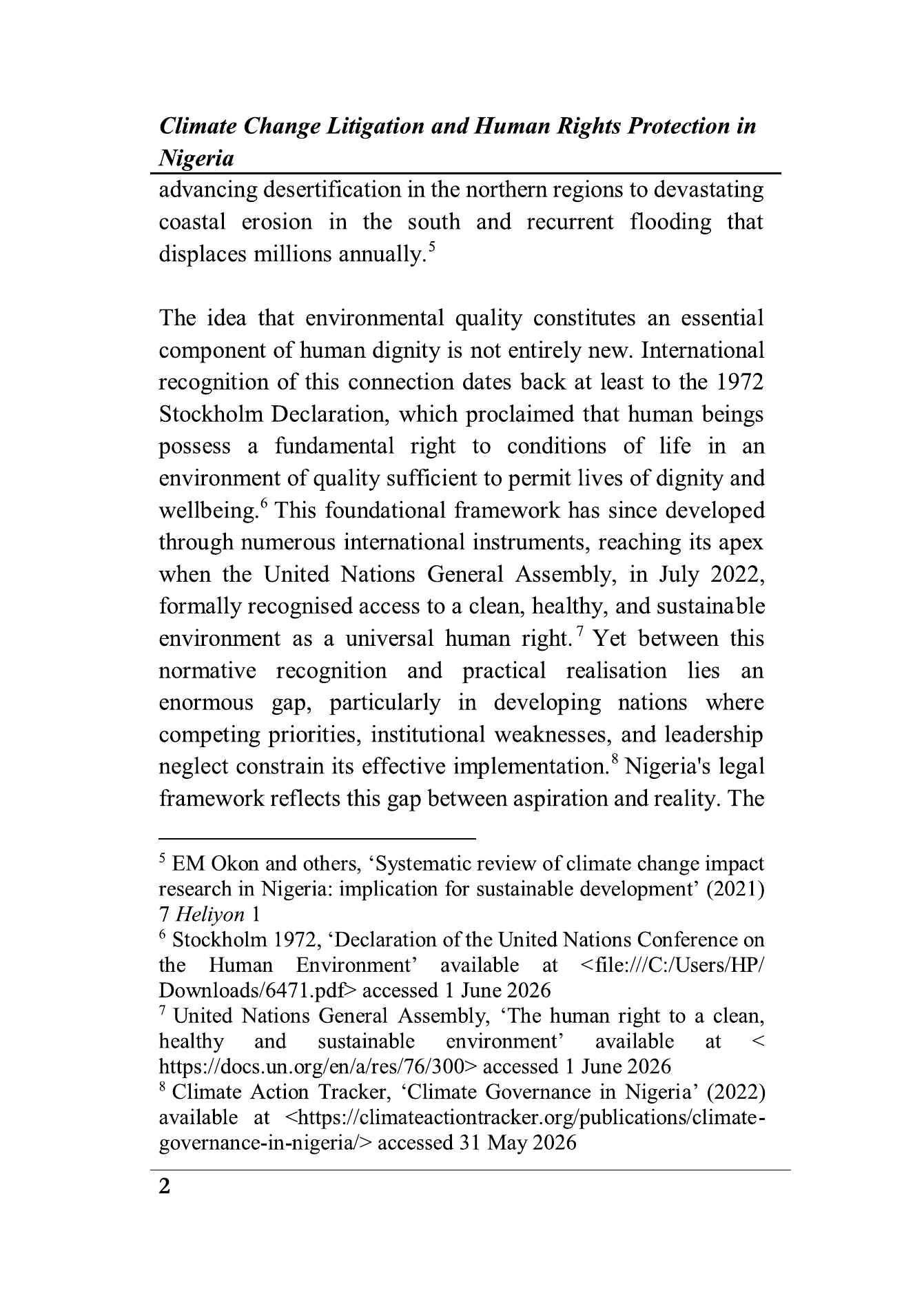
Loading page…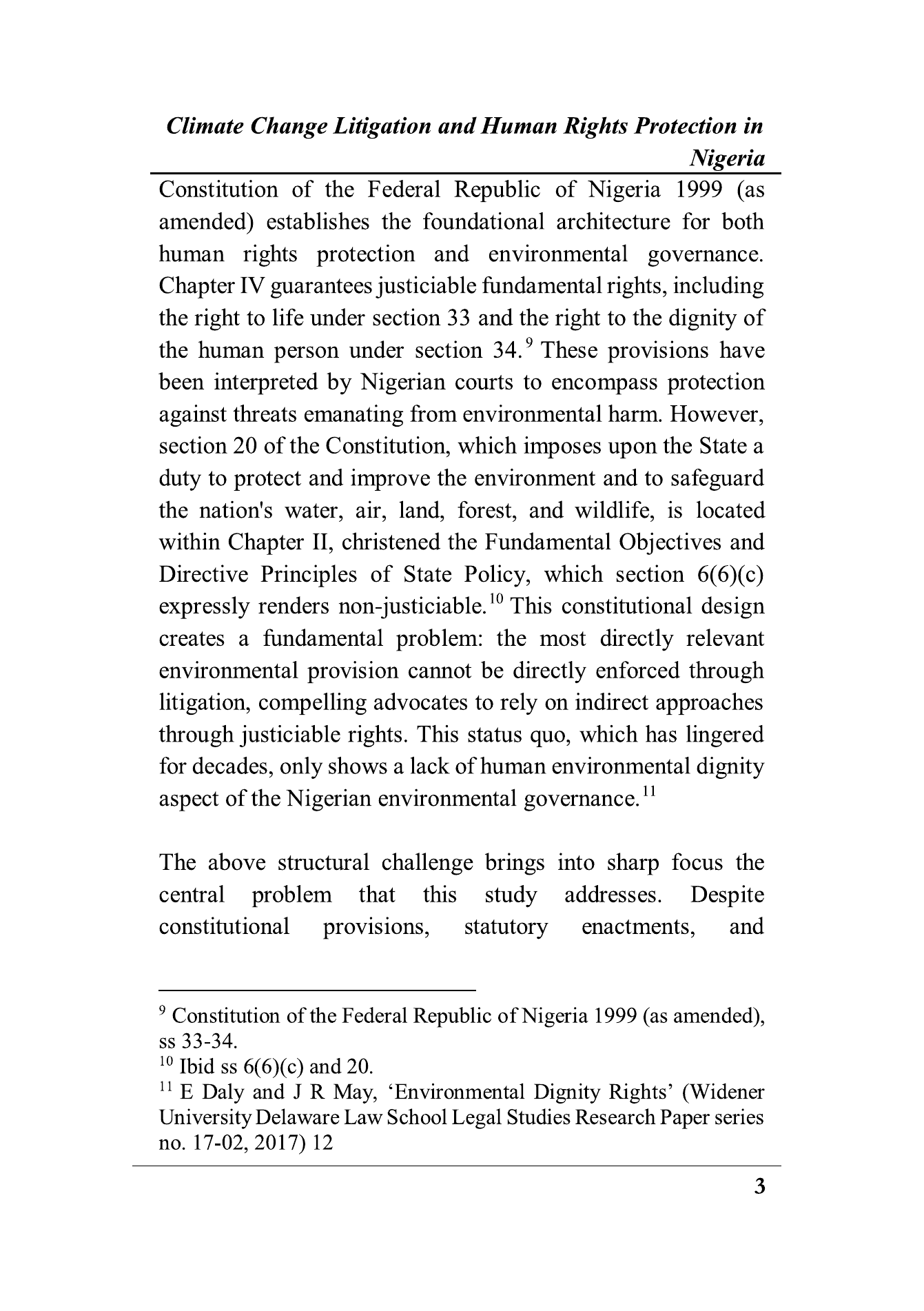
Loading page…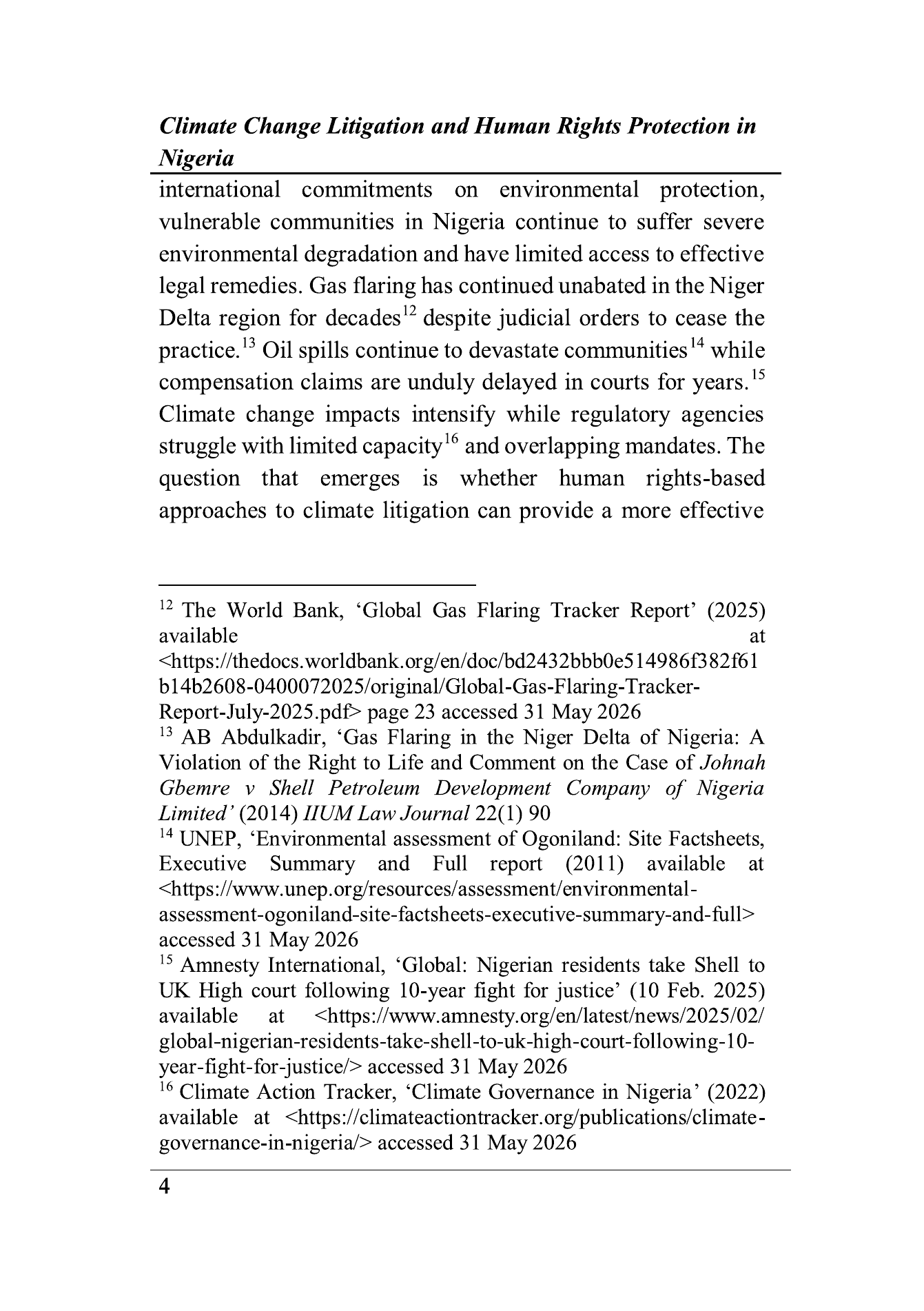
Keep reading
That was the free preview. 57 more pages in the full monograph, yours as a PDF for ₦7,000.