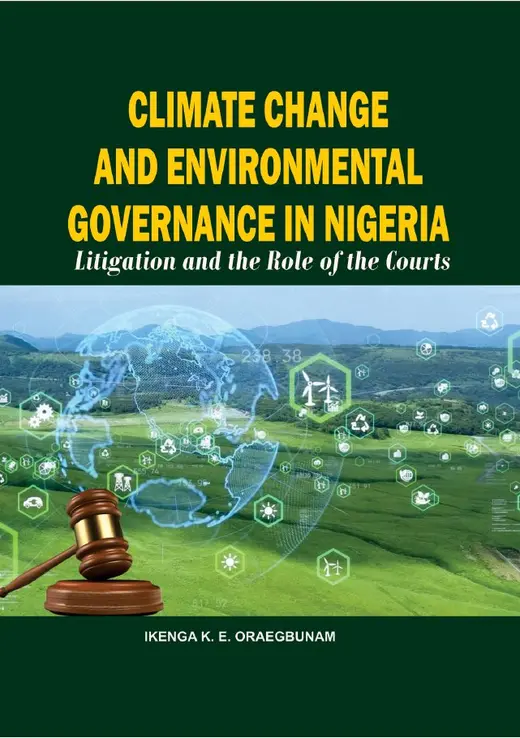
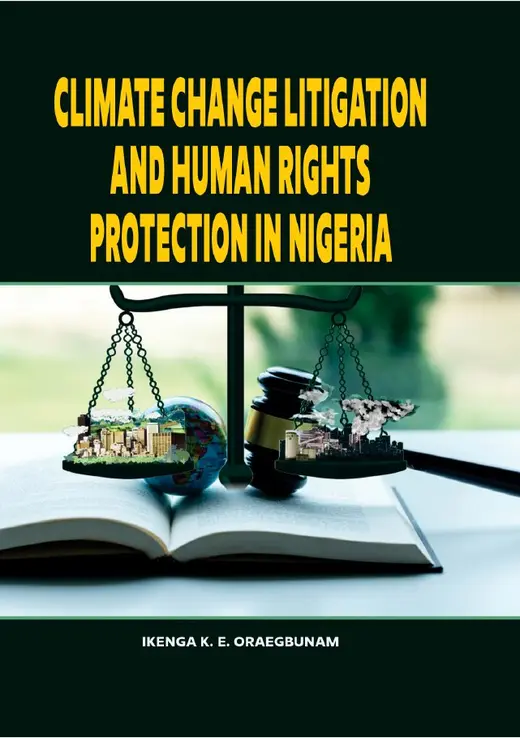
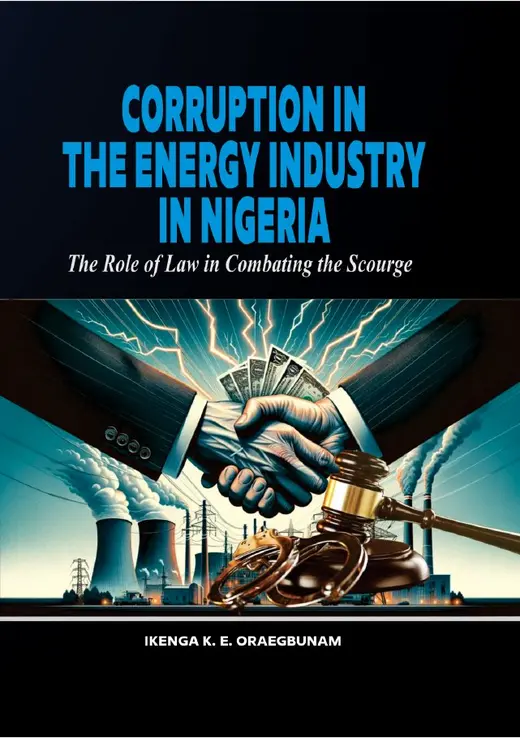
Opening the monograph…

International & Environmental Law
Climate Change Litigation in Nigeria
Dealing with the Obstacles
About the monograph
Climate change litigation is increasingly recognized as a critical tool for enforcing climate obligations, shaping public policy, and advancing environmental justice across the globe. While jurisdictions such as Netherlands, India, Pakistan, Colombia, and South A frica have developed innovative judicial responses to climate change claims, Nigeria's experience remains comparatively limited and largely indirect, often framed through traditional environmental or human rights disputes rather than climate-specific actions. This work examines the principal hurdles that impede the emergence and effectiveness of climate change litigation in Nigeria. It argues that despite the enactment of Climate Change Act 2021 and the existence of a relatively dense environmental regulatory framework, a combination of restrictive procedural doctrines, constitutional non-justiciability, weak enforcement, institutional constraints, evidentiary challenges, and broader governance deficits significantly constrain climate-related claims. The study adopts a qualitative doctrinal methodology, drawing on Nigerian constitutional and statutory provisions, key judicial decisions, international climate instruments, and comparative jurisprudence. It finds that while recent case law has relaxed /ocus standi in environmental disputes and recognised a right to a healthy environment, courts remain cautious in confronting government climate policies or corporate emissions practices directly. The study proposes context-specific reforms, including constitutional amendments to strengthen environmental rights, statutory clarification of standing rules, enhanced judicial capacity-building, I improved regulatory enforcement, and strategic use of comparative I jurisprudence and international climate norms as interpretive tools in Nigerian courts.
Cite this book
Ikenga K. E. Oraegbunam, Climate Change Litigation in Nigeria: Dealing with the Obstacles (TETFund Academic Publishing Centre, Nnamdi Azikiwe University, 2026), ISBN 978-978-63774-6-9.
Free preview
First 4 pagesLoading page…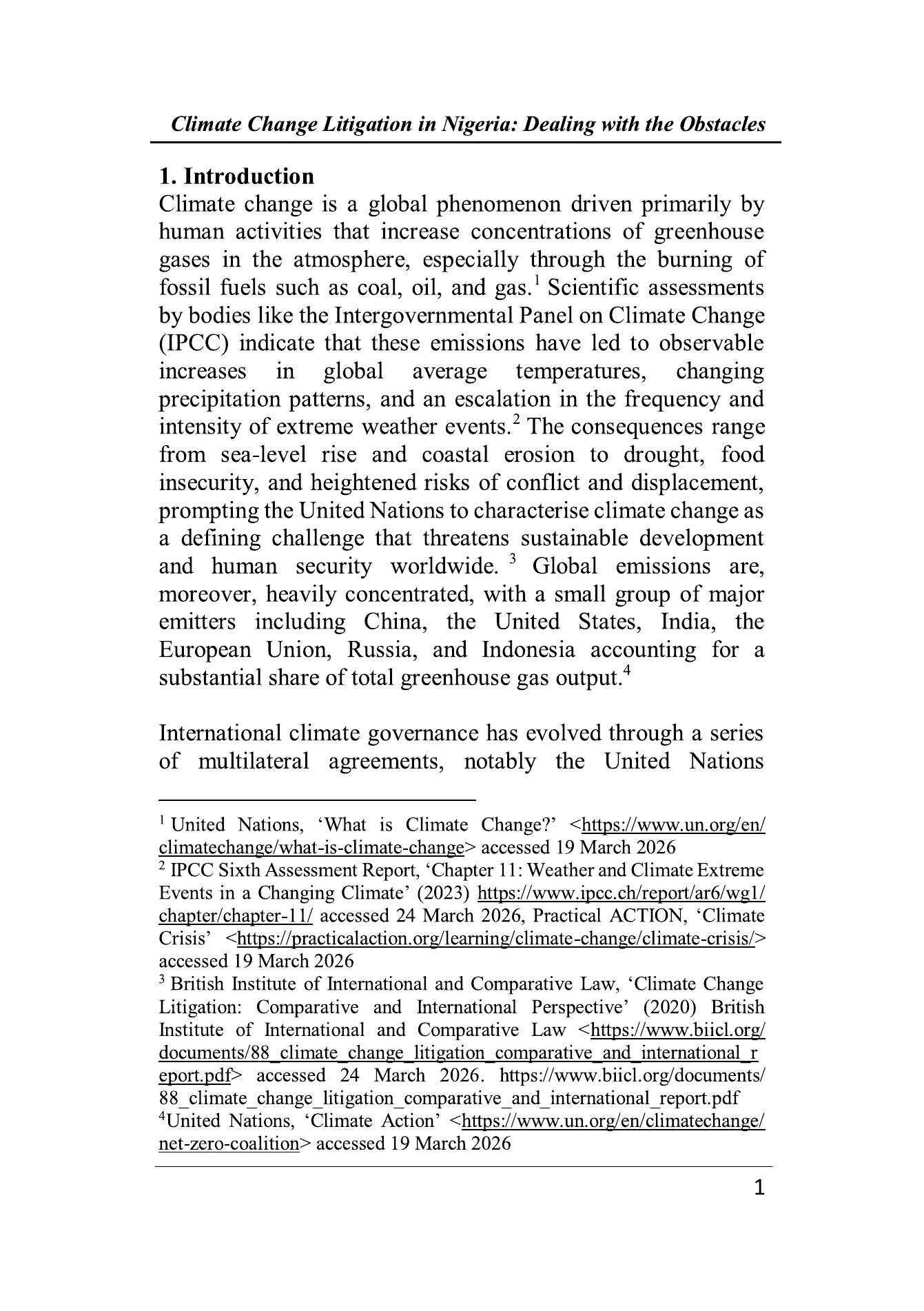
Loading page…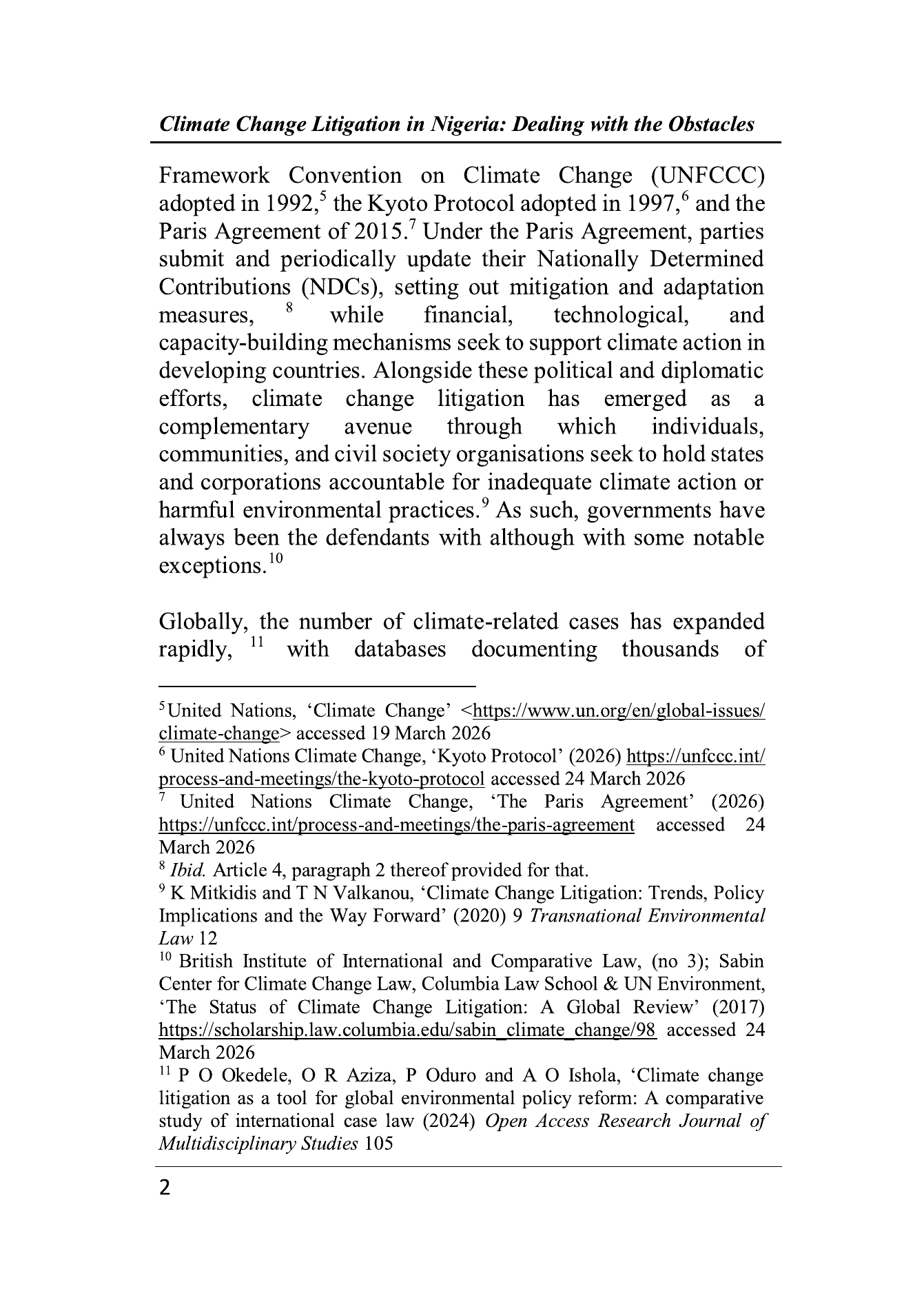
Loading page…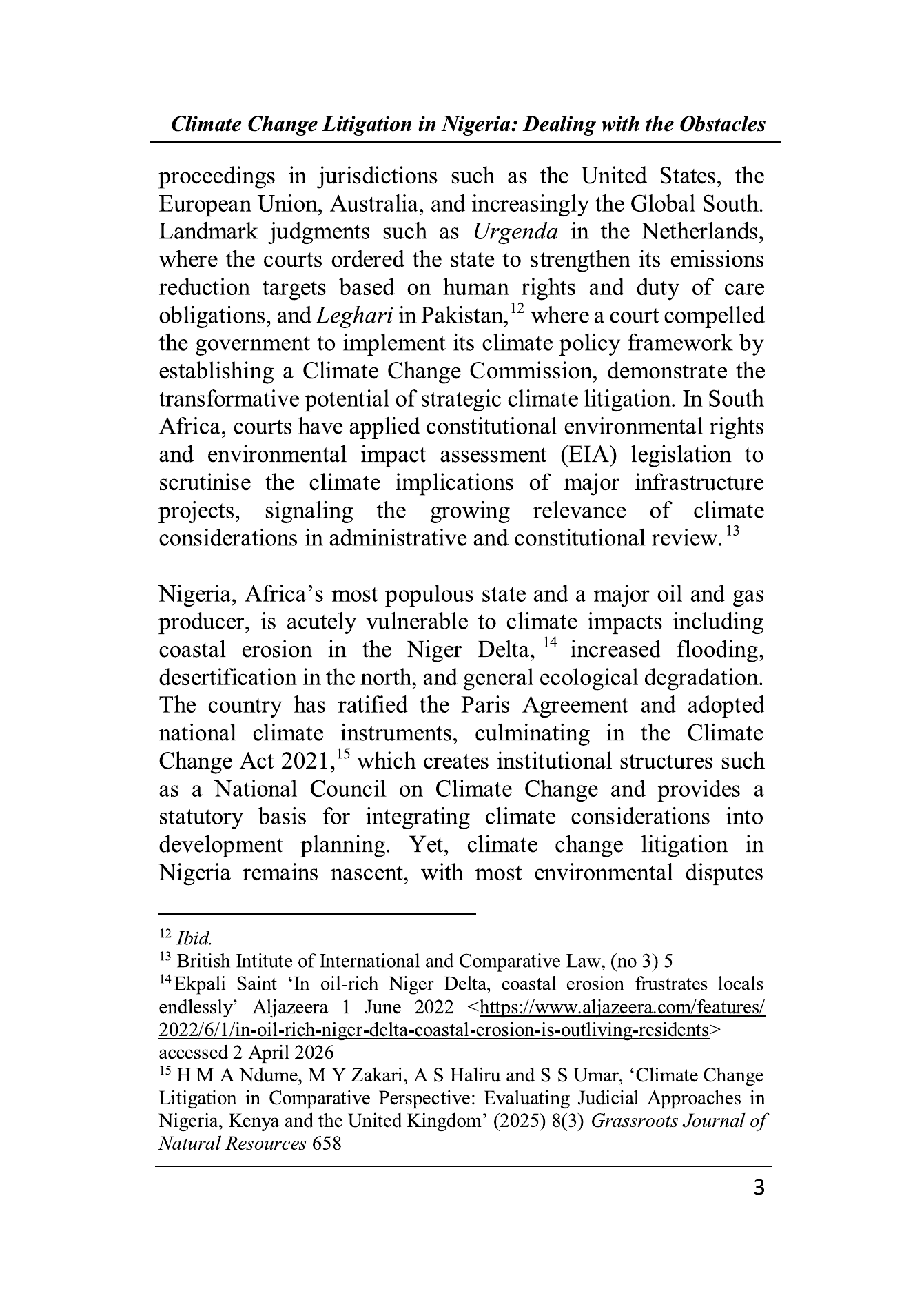
Loading page…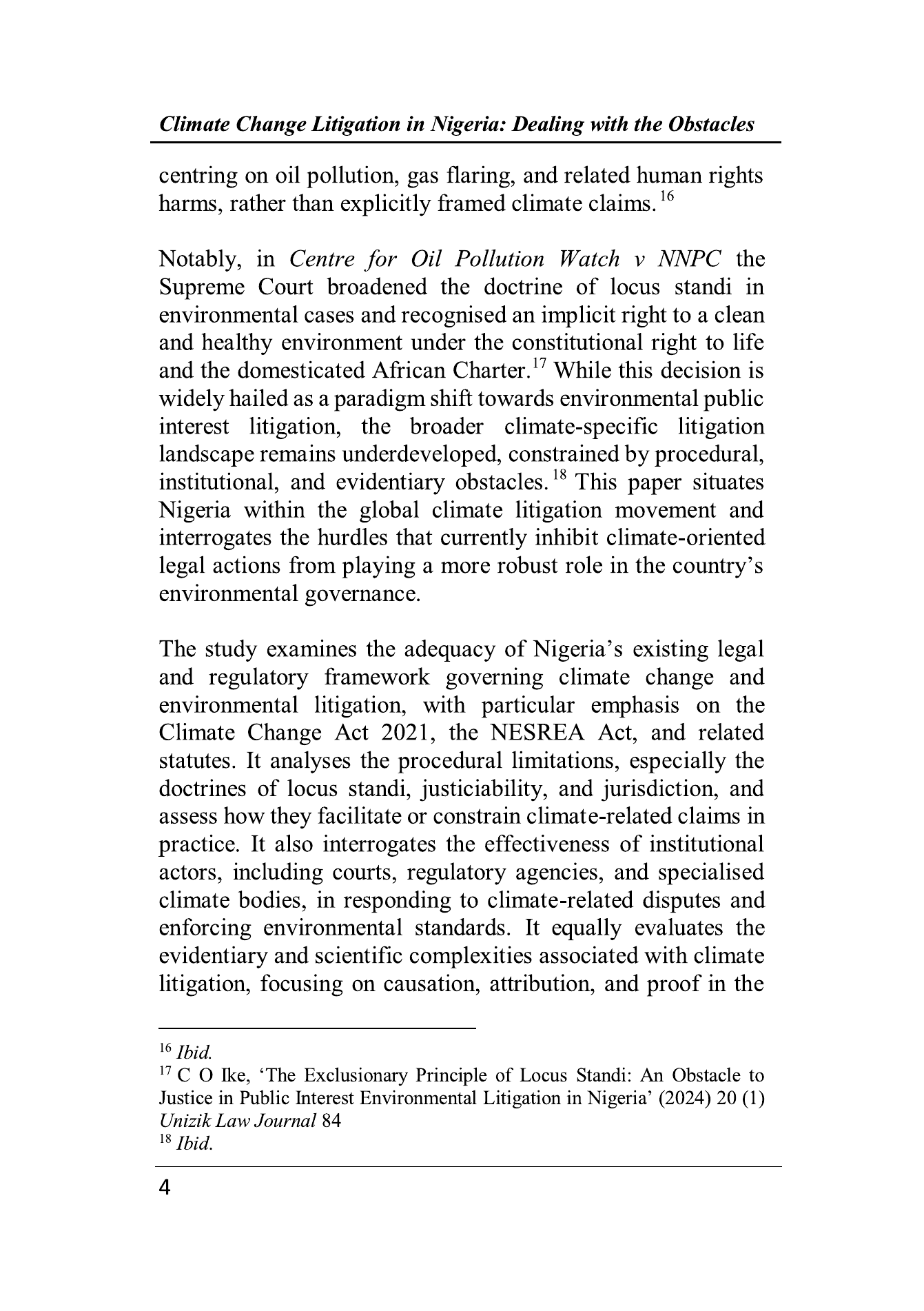
Keep reading
That was the free preview. 34 more pages in the full monograph, yours as a PDF for ₦7,000.