Opening the monograph…
Technology, Cyber & AI
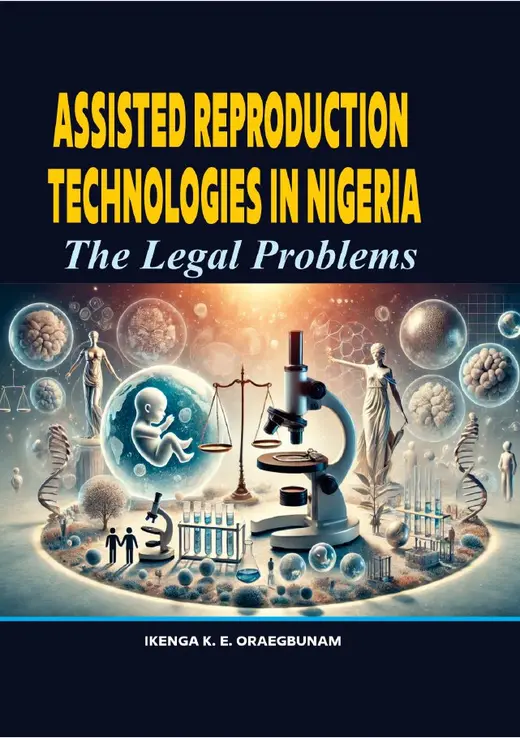
Assisted Reproduction Technologies in Nigeria
The Legal Problems
About the monograph
The rapid proliferation of Assisted Reproduction Technologies (ART) in Nigeria has provided a vital medical intervention for infertility, a condition accompanied by immense socio-cultural stigma. However, the integration of procedures such as /n Vitro Fertilization, artificial insemination, and surrogacy into the Nigerian healthcare system has drastically outpaced egislative development. This work examines the critical legal problems arising from the practice of ART in Nigeria. Relying on the relevant provisions of the Constitution of the Federal Republic of Nigeria 1999, the National Health Act 2014, the Child's Rights Act 2003, and appropriate judicial authorities, the study identifies a profound legal vacuum. The study finds that the absence of a comprehensive regulatory framework creates severe legal uncertainties regarding the enforceability of surrogacy contracts, the determination of legal parentage, the presumption of legitimacy, and the egal status of cryopreserved embryos. Furthermore, it highlights the ethical dilemmas of donor anonymity and the risks of medical negligence in unregulated fertility clinics. The work concludes that applying traditional family and contract law principles to modern reproductive technologies is fundamentally inadequate. It recommends the urgent enactment of a dedicated and comprehensive statutory framework for ART in Nigeria, alongside the establishment of an independent regulatory body to standardize practices, protect the rights of all participating parties, and safeguard the best interests of the resulting child.
Cite this book
Ikenga K. E. Oraegbunam, Assisted Reproduction Technologies in Nigeria: The Legal Problems (TETFund Academic Publishing Centre, Nnamdi Azikiwe University, 2026), ISBN 978-978-8590-62-0.
Free preview
First 4 pagesLoading page…
Loading page…
Loading page…
Loading page…
Keep reading
That was the free preview. 27 more pages in the full monograph, yours as a PDF for ₦7,000.