Opening the monograph…
International & Environmental Law
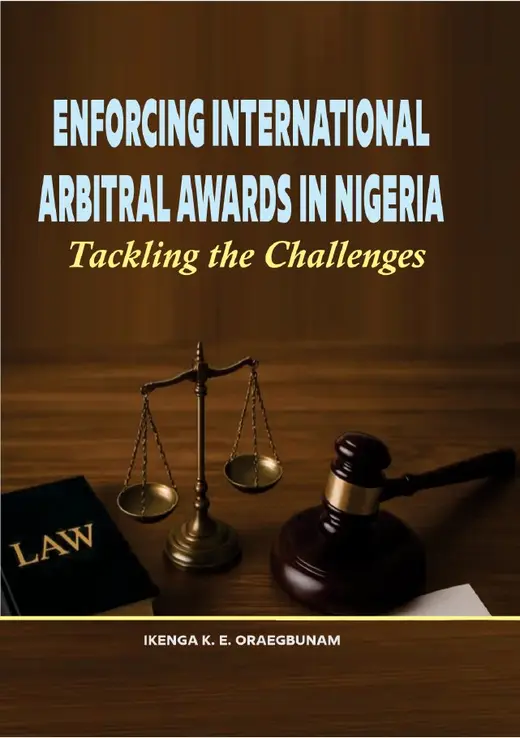
Enforcing International Arbitral Awards in Nigeria
Tackling the Challenges
About the monograph
The enforcement of international arbitral awards is central to the effectiveness of arbitration, as it ensures that successful parties can realize the benefits of their awards. In Nigeria, although arbitration is increasingly preferred for resolving international commercial disputes, its enforcement regime is still hindered by significant legal and practical challenges. This study examines these challenges within the framework of statutory provisions, judicial practice, and international obligations. Key issues identified include judicial delays, procedural inefficiencies, and excessive technicalities, all of which undermine the speed and finality of arbitration. Inconsistent judicial interpretations, particularly on jurisdiction, admissibility, and limitation periods, further create uncertainty. The study further found that the broad and unpredictable application of public policy exceptions, alongside issues of reciprocity and conflicting interpretations of foreign law, also complicate enforcement. Institutional limitations, including inadequate expertise and limited awareness of international best practices, contribute to these challenges. Collectively, these issues weaken investor confidence and reduce Nigeria's attractiveness as an arbitral seat. The work, consequently, recommends reforms to improve judicial efficiency, clarify legal ambiguities, ensure consistency in the application of public policy, and align Nigeria's enforcement regime with global standards.
Cite this book
Ikenga K. E. Oraegbunam, Enforcing International Arbitral Awards in Nigeria: Tackling the Challenges (TETFund Academic Publishing Centre, Nnamdi Azikiwe University, 2026), ISBN 978-978-8590-15-6.
Free preview
First 4 pagesLoading page…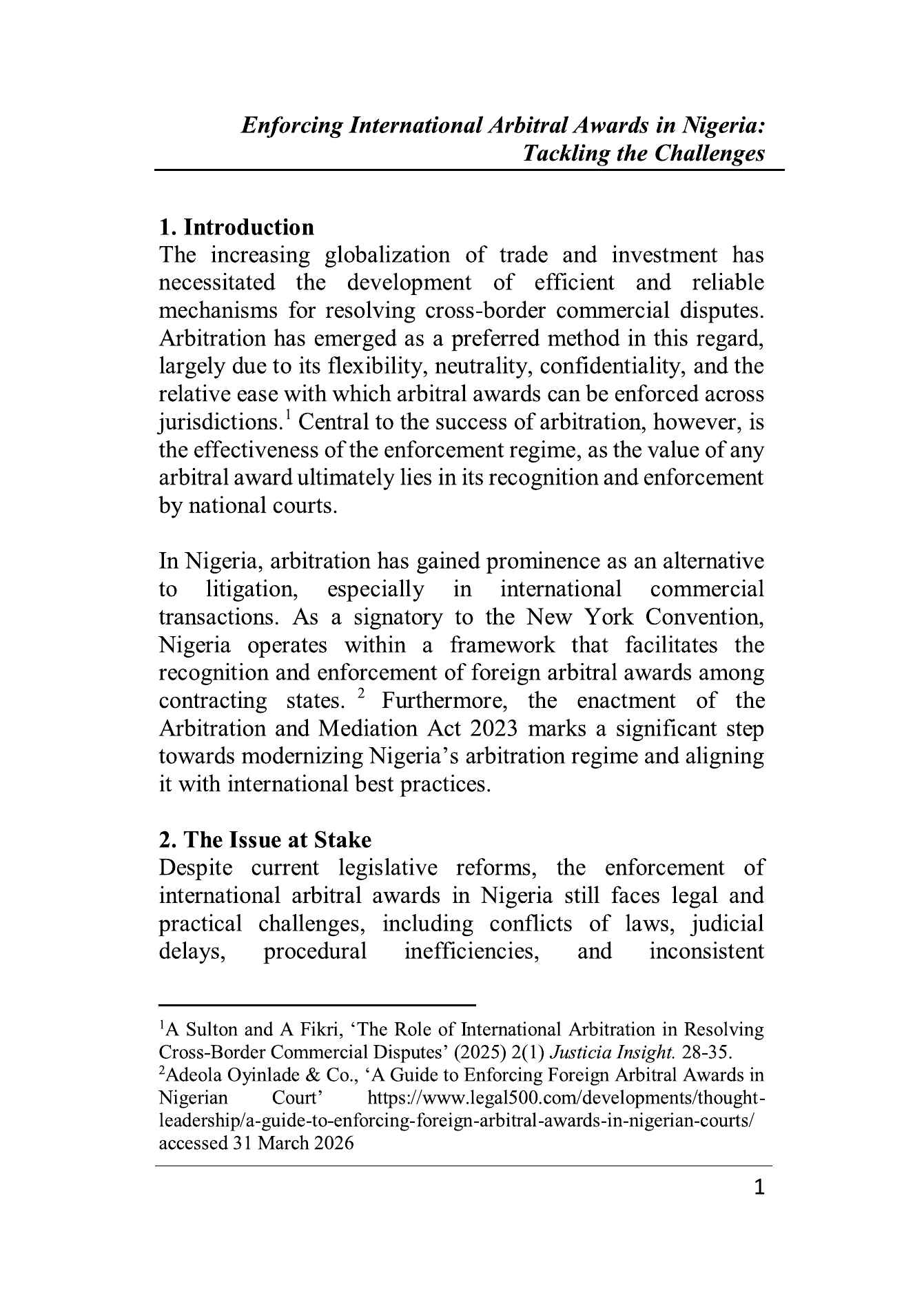
Loading page…
Loading page…
Loading page…
Keep reading
That was the free preview. 28 more pages in the full monograph, yours as a PDF for ₦7,000.