Opening the monograph…
Technology, Cyber & AI
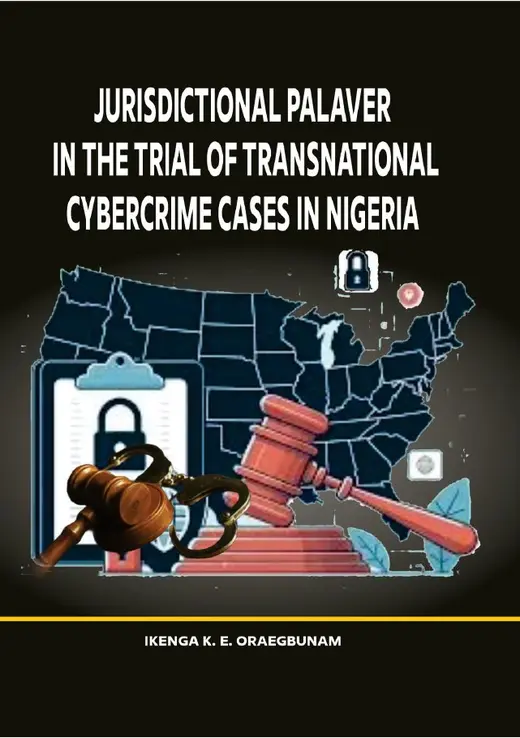
Jurisdictional Palaver in the Trial of Transnational Cybercrime Cases in Nigeria
About the monograph
The borderless nature of cyberspace has fundamentally disrupted traditional legal notions of jurisdiction, creating complex challenges in the adjudication of transnational cybercrime cases. This study critically examines the legal and practical difficulties associated with asserting jurisdiction over cyber offences that transcend territorial boundaries. It interrogates the adequacy of existing jurisdictional principles, namely territoriality, nationality, protective, and universality, in addressing the realities of cybercrime, where offenders, victims, and digital infrastructure are often dispersed across multiple jurisdictions. Adopting a doctrinal research methodology, the study analyses relevant international instruments, including the Budapest Convention on Cybercrime, as well as domestic legal frameworks with particular reference to Nigeria's Cybercrimes (Prohibition, Prevention, etc.) Act, 2015. It further evaluates judicial responses and emerging state practices in resolving jurisdictional conflicts, including issues of concurrent jurisdiction, extradition, mutual legal assistance, and the role of international cooperation. The study finds that existing jurisdictional frameworks are largely inadequate in effectively addressing the complexities of transnational cybercrime, leading to legal uncertainty, forum conflicts, and enforcement gaps. It argues for a more harmonised and cooperative international legal regime, supported by clearer rules on jurisdictional priority and enhanced cross-border collaboration mechanisms. The paper concludes by recommending the adoption of unified jurisdictional standards, strengthening of international cooperation frameworks, and the development of adaptive legal principles capable of responding to the evolving dynamics of cybercrime ina digital age.
Cite this book
Ikenga K. E. Oraegbunam, Jurisdictional Palaver in the Trial of Transnational Cybercrime Cases in Nigeria (TETFund Academic Publishing Centre, Nnamdi Azikiwe University, 2026), ISBN 978-978-63369-8-5.
Free preview
First 4 pagesLoading page…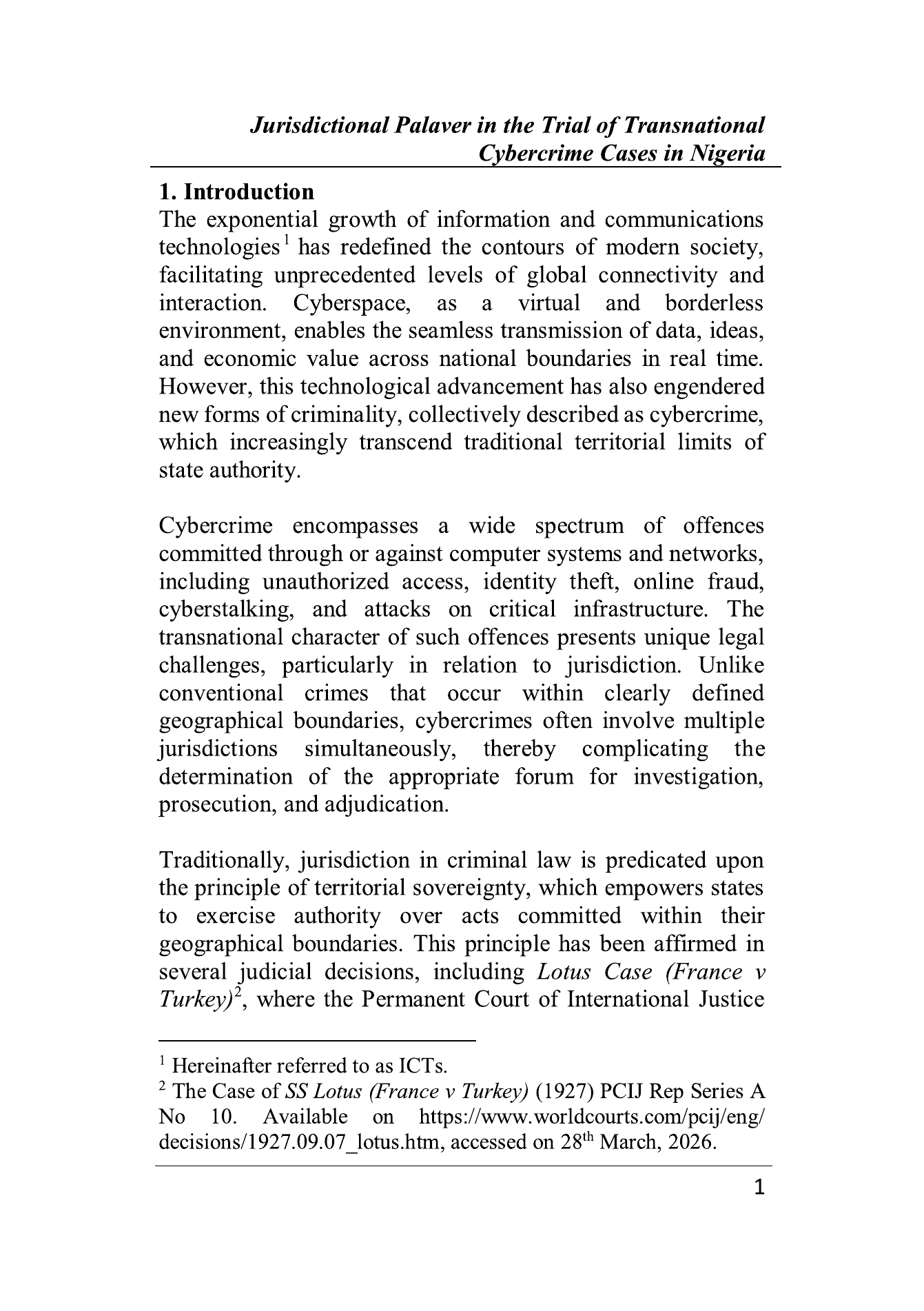
Loading page…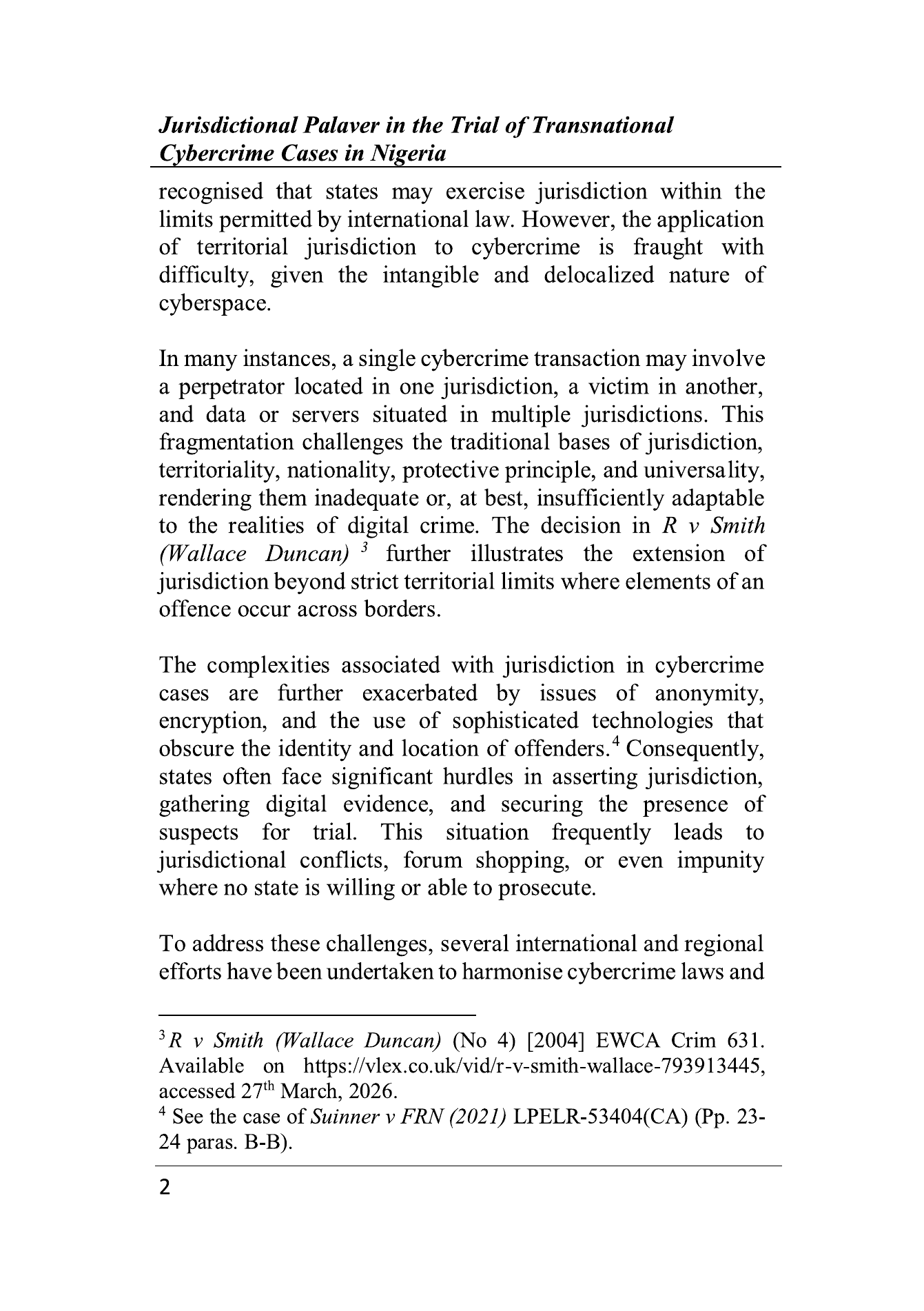
Loading page…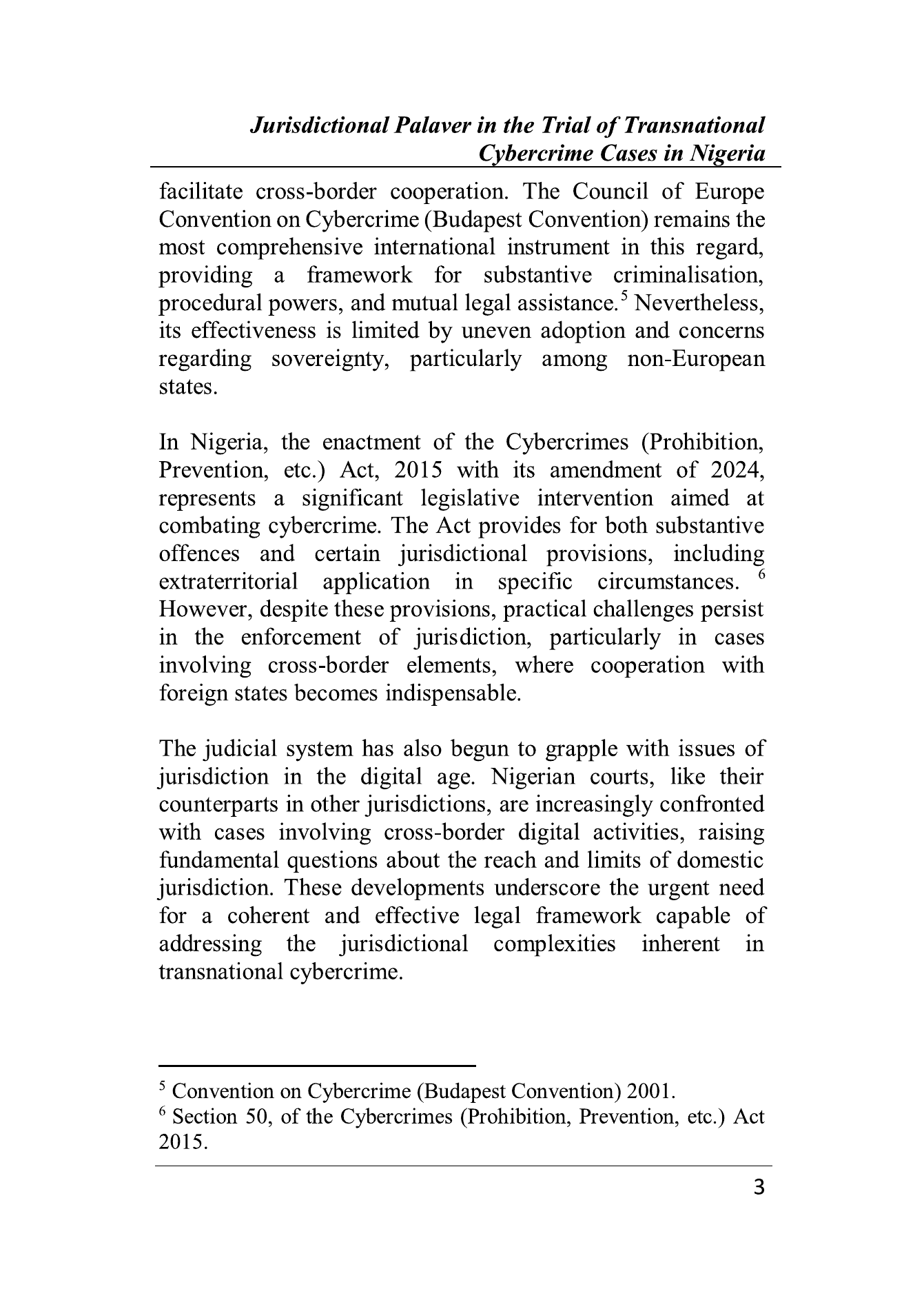
Loading page…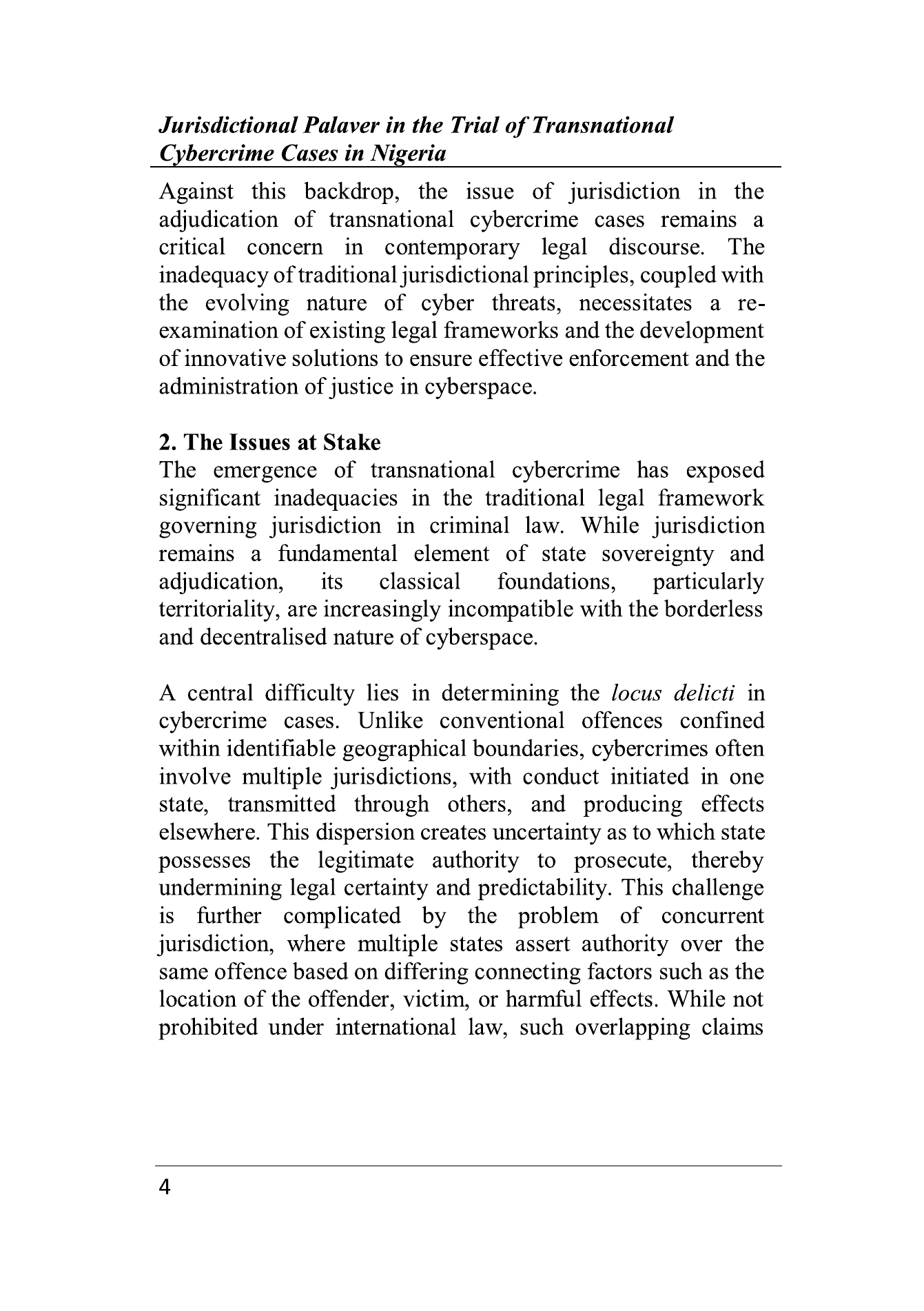
Keep reading
That was the free preview. 31 more pages in the full monograph, yours as a PDF for ₦7,000.