Opening the monograph…
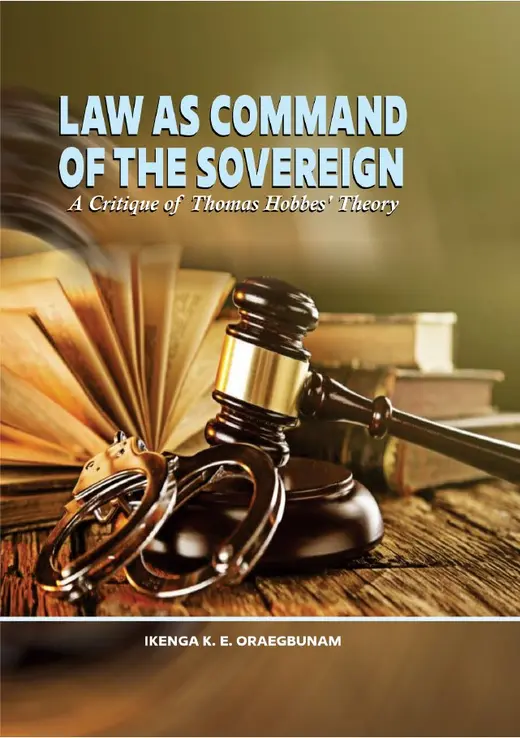
International & Environmental Law
Law as Command of the Sovereign
A Critique of Thomas Hobbes’ Theory
About the monograph
This work examines Thomas Hobbes' conception of law as an instrument of sovereign command. Hobbes' theory is grounded in his belief that human beings, left to their natural tendencies, exist in a 'state of nature’ characterized by fear, insecurity, and perpetual conflict. Conflicts in society exist as a result of power in the hands of different individuals leading to confusion and chaos. As a result of this, Hobbes invokes the concept of sovereignty in order to guide, direct and lead the people in the community, and make the society a peaceful and harmonious one. To realise this, individuals collectively surrender their natural rights to a sovereign authority whose duty is to maintain peace, ensure obedience, and provide social order. In Hobbes’ view, law is not merely a set of moral guidelines but the command of the sovereign, backed by coercive and forceful power. This study analyzes Hobbes' understanding of law, the nature and function of sovereign, and the jurisprudential implications of giving absolute control to a central authority. The work evaluates the strengths, weaknesses, and contemporary relevance of Hobbes'-doctrine. It finds that Hobbes' view is influential and effective but raises questions about liberty, freedom, legitimacy, and the risk of authoritarianism.
Cite this book
Ikenga K. E. Oraegbunam, Law as Command of the Sovereign: A Critique of Thomas Hobbes’ Theory (Ahmadu Bello University Press, 2024), ISBN 978-978-8590-31-6.
Free preview
First 4 pagesLoading page…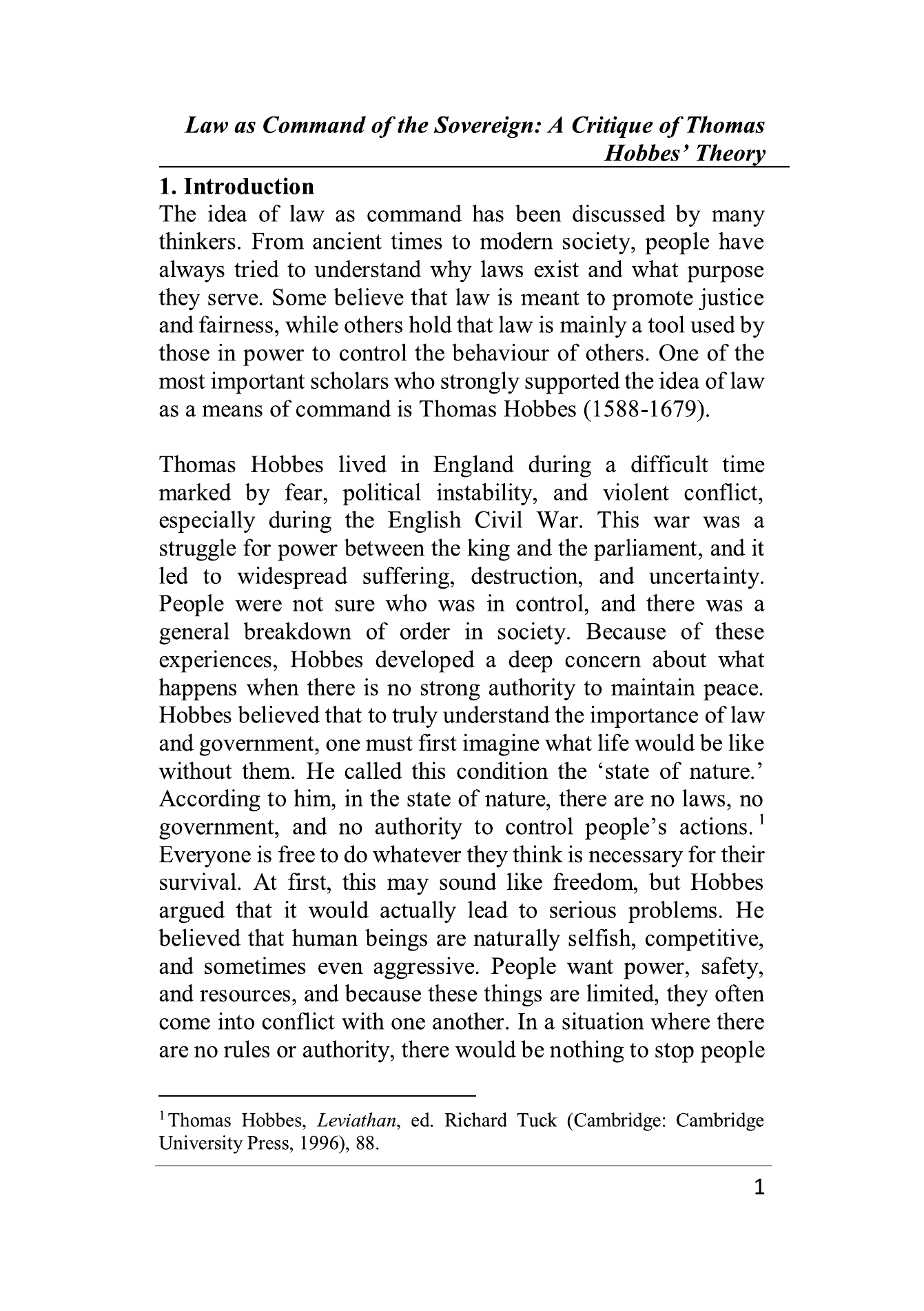
Loading page…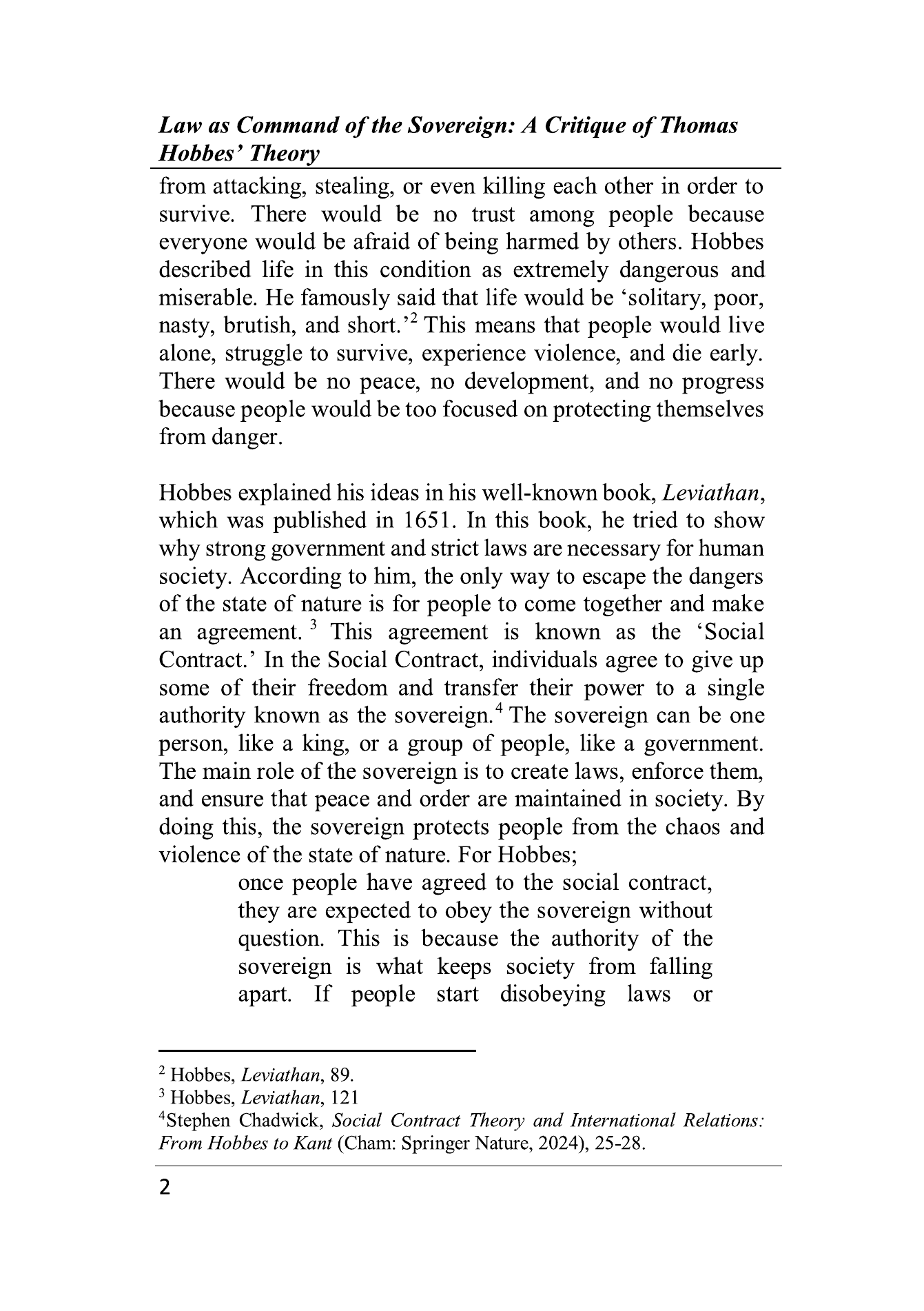
Loading page…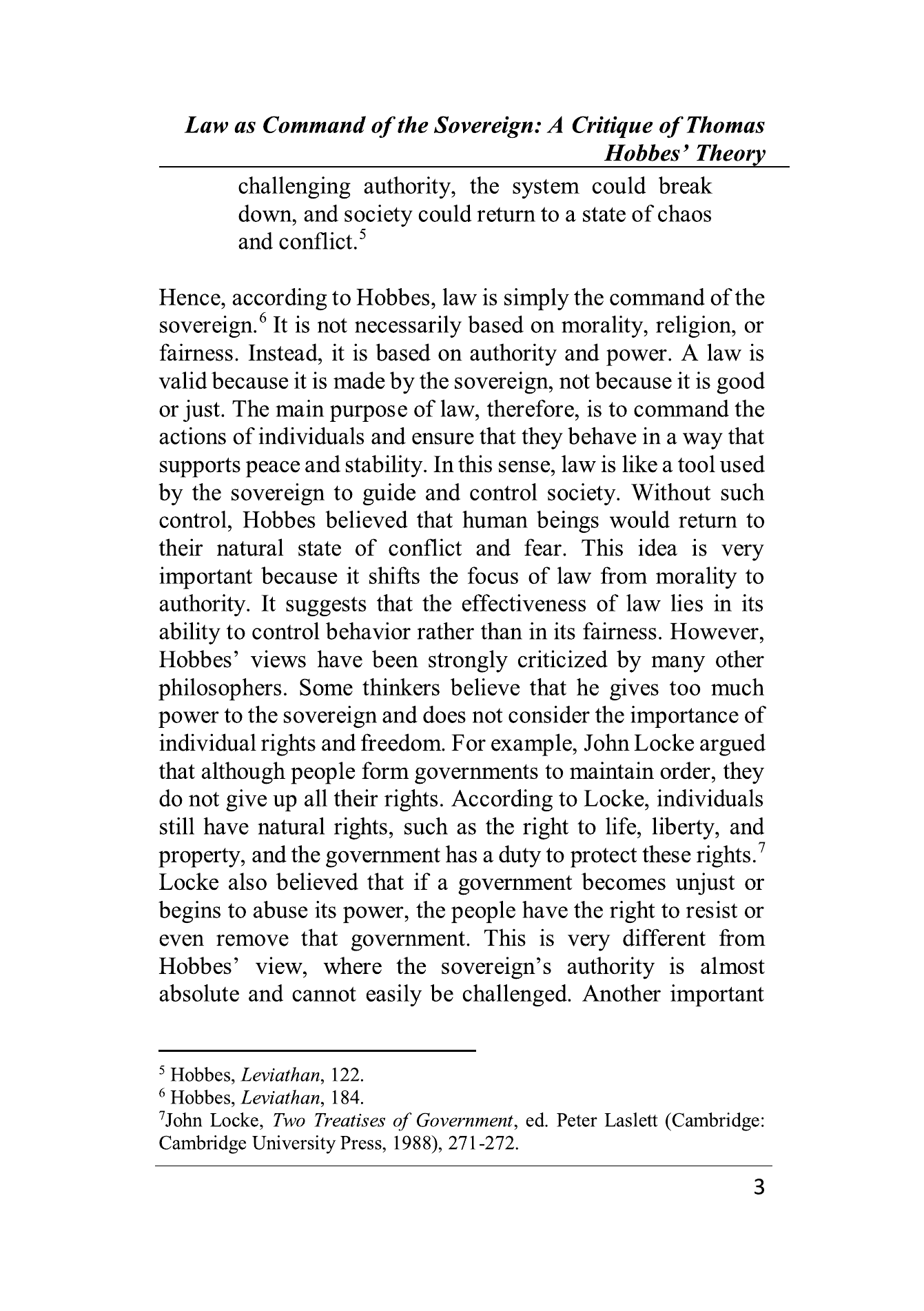
Loading page…
Keep reading
That was the free preview. 34 more pages in the full monograph, yours as a PDF for ₦7,000.