Opening the monograph…

International & Environmental Law
Non-Refoulement under Customary International Law
About the monograph
This study seeks to examine the nature, historical evolution, normative foundations, and legal content of the principle of non-refoulement. It situates the principle within the classical framework of customary international law, which requires the presence of both widespread and consistent State practice and a corresponding sense of legal obligation (opinio juris). The analysis traces the development of non-refoulement from its early antecedents in interwar refugee arrangements and post-Second World War humanitarian commitments to its contemporary recognition across multiple legal regimes. In addition, the work evaluates the relationship between refugee law and complementary protection under international human rights law, particularly the absolute prohibition on returning individuals to a real risk of torture or cruel, inhuman or degrading treatment. The central argument advanced in this study is that non-refoulement has attained the status of customary international law, at least in its core protective dimension, prohibiting transfer to persecution, torture, or other serious harm. However, the study also critically observes that the practical implementation of non-refoulement remains uneven and, in many contexts, deeply problematic, as certain state practices often seek to circumvent formal obligations while producing outcomes that are difficult to reconcile with the underlying humanitarian rationale of non-refoulement. The study concludes that while the customary status of non-refoulement is strongly supported in principle, its effectiveness in practice depends on several interrelated factors, which include robust domestic incorporation of international obligations, the availability of fair and effective procedural safeguards (such as access to asylum procedures and judicial review), and the strengthening of international monitoring and accountability mechanisms.
Cite this book
Ikenga K. E. Oraegbunam, Non-Refoulement under Customary International Law (Federal University of Technology, Minna Press (FUTMP), 2022), ISBN 978-978-8590-00-2.
Free preview
First 4 pagesLoading page…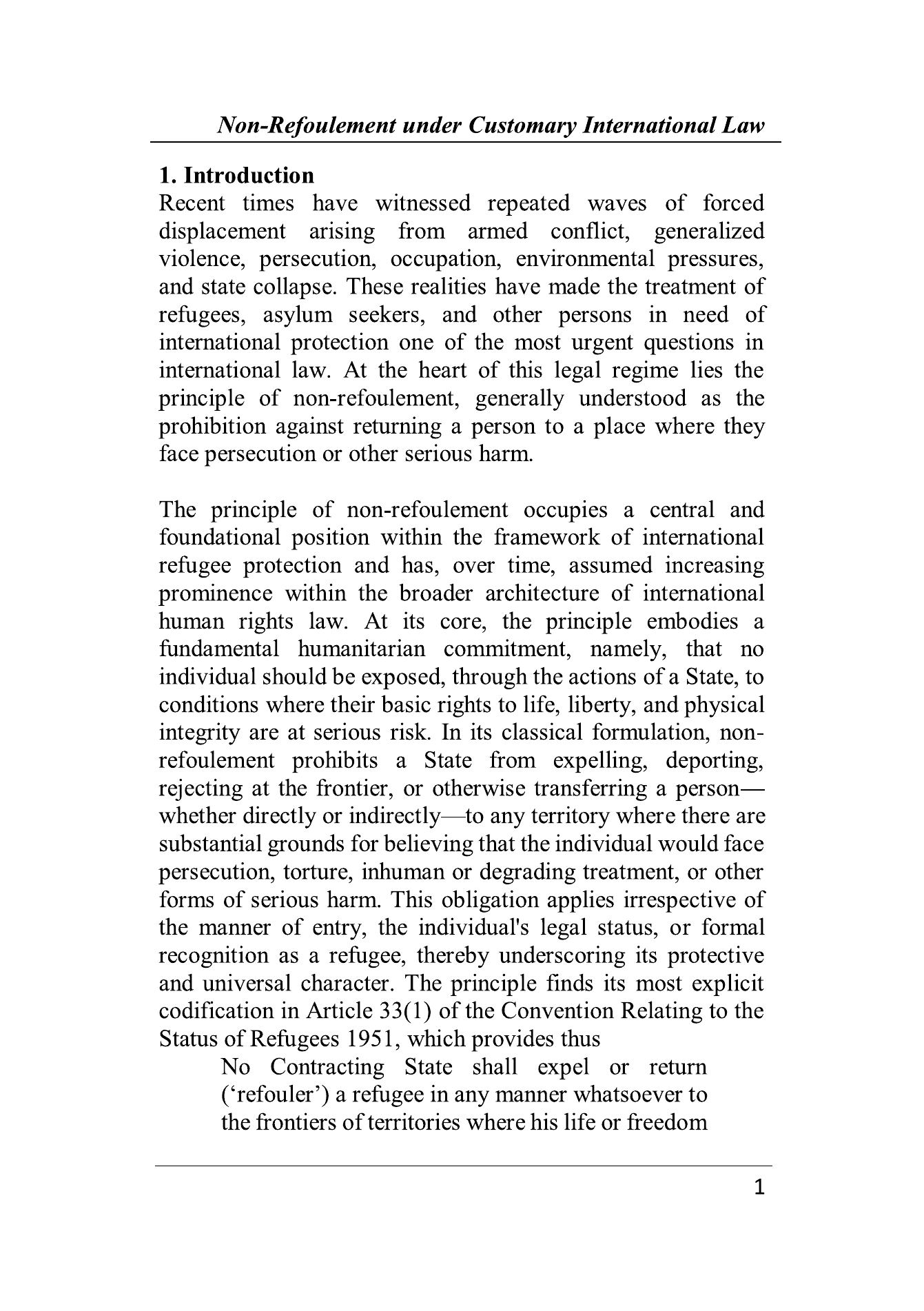
Loading page…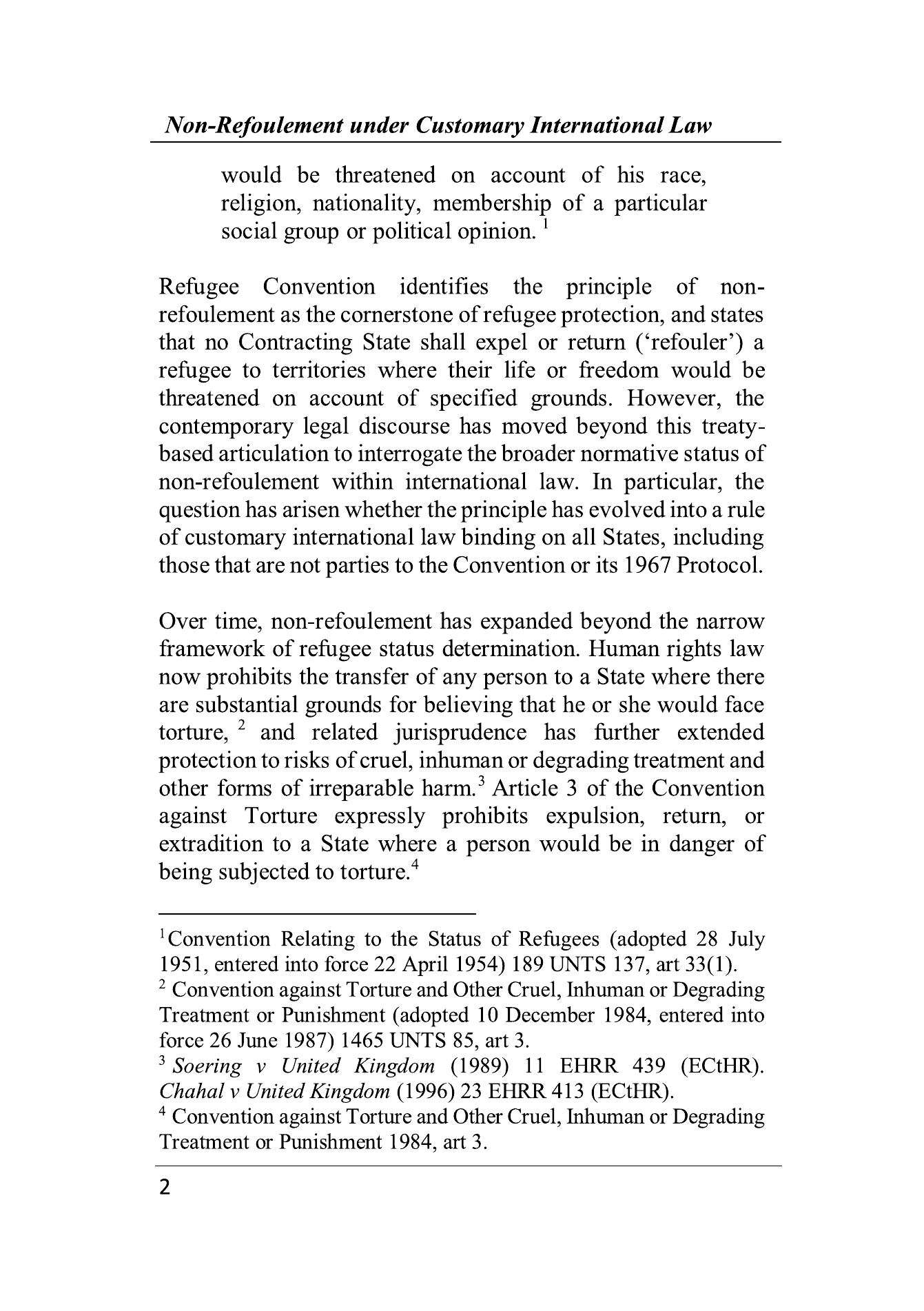
Loading page…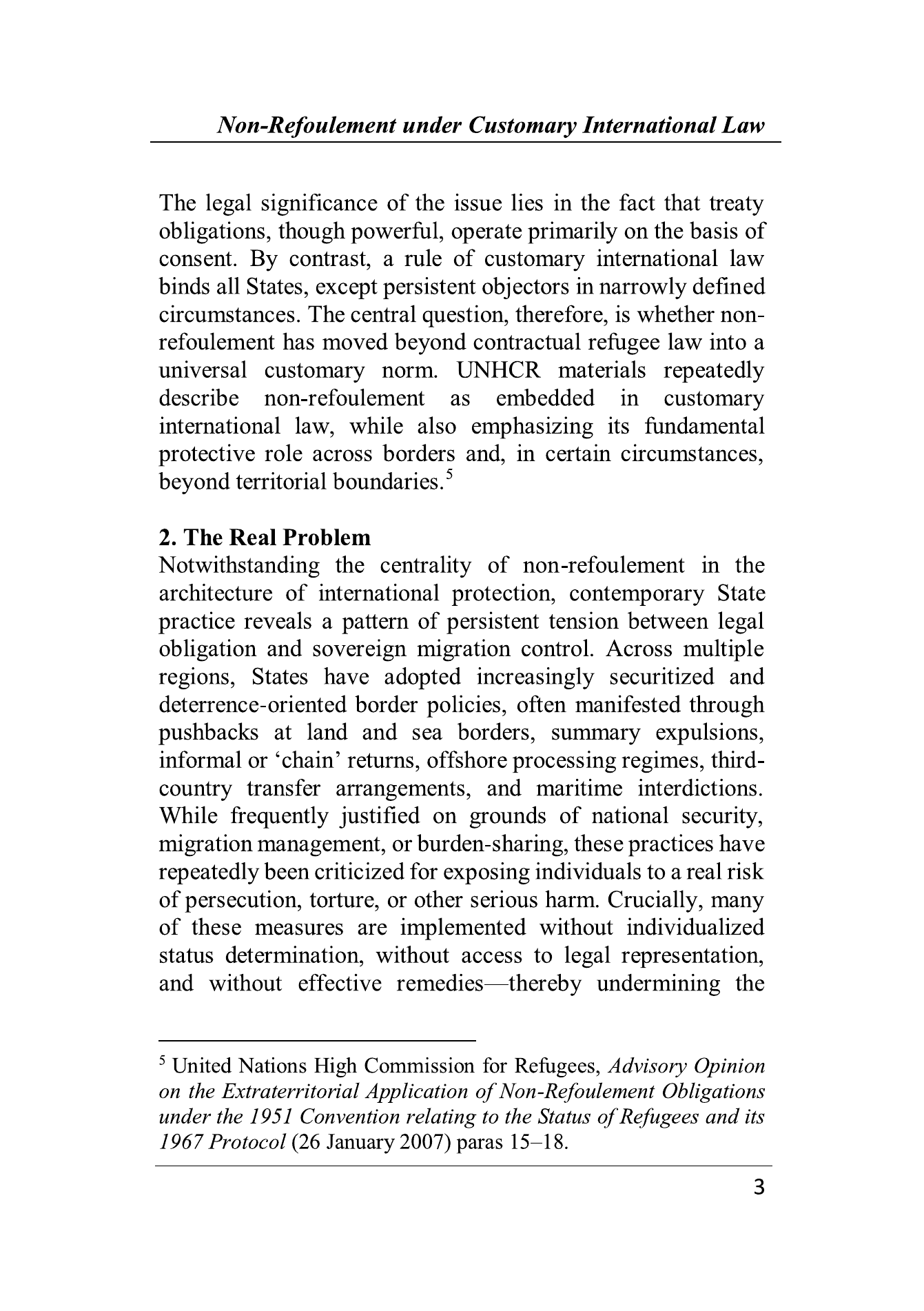
Loading page…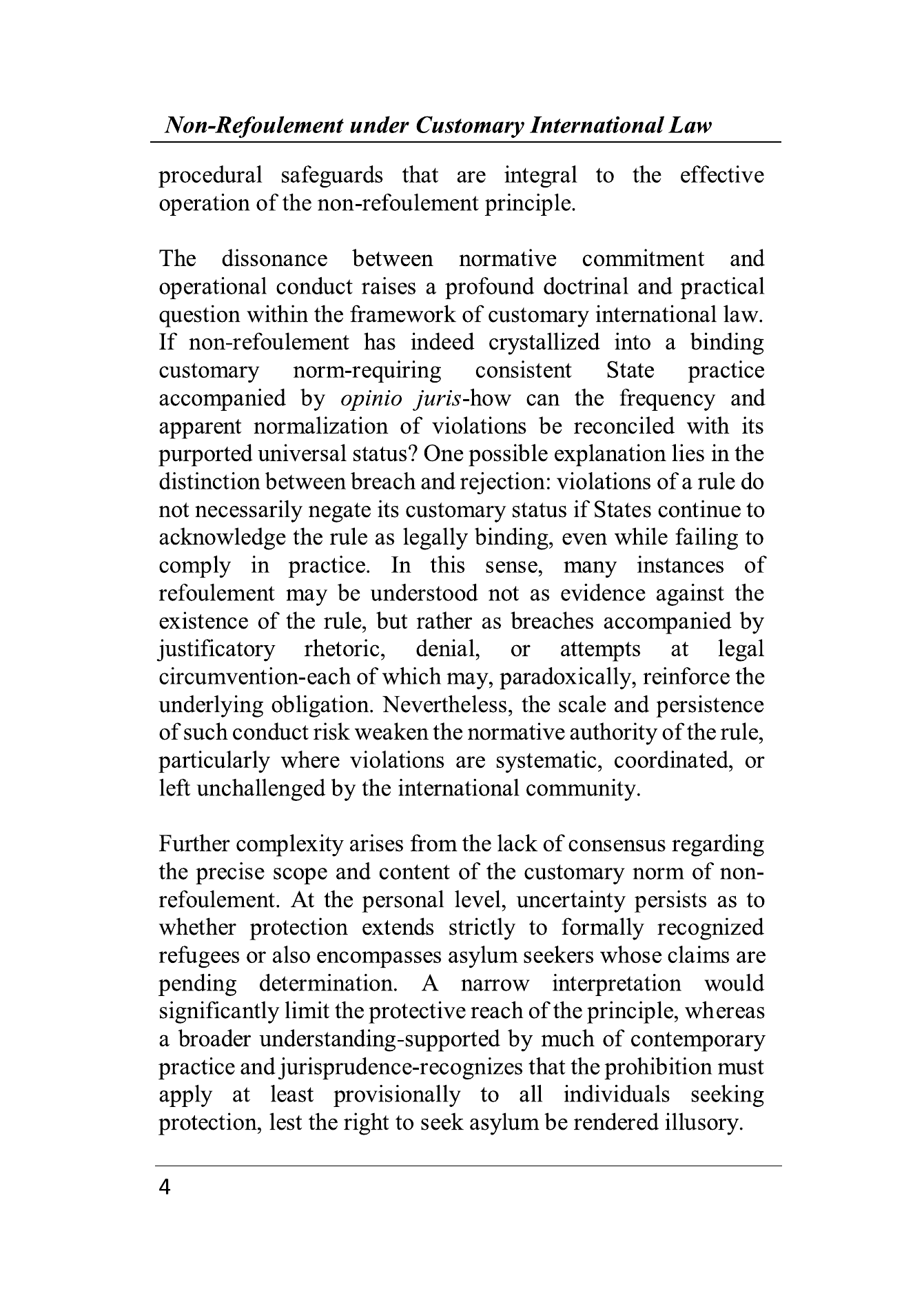
Keep reading
That was the free preview. 27 more pages in the full monograph, yours as a PDF for ₦7,000.