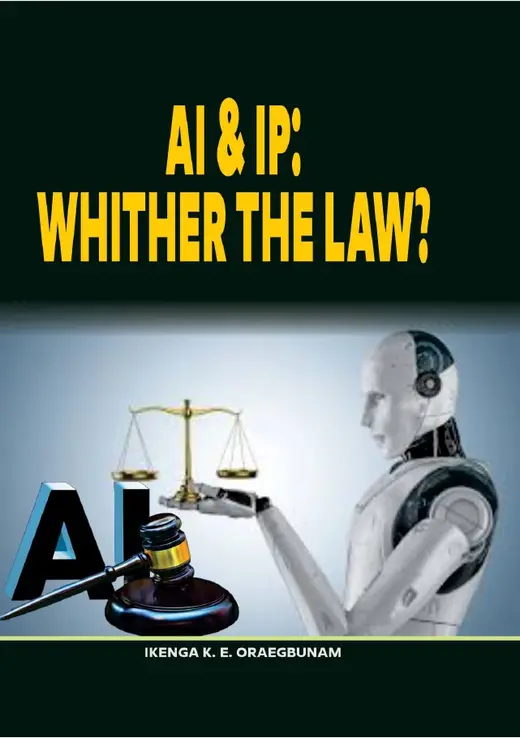
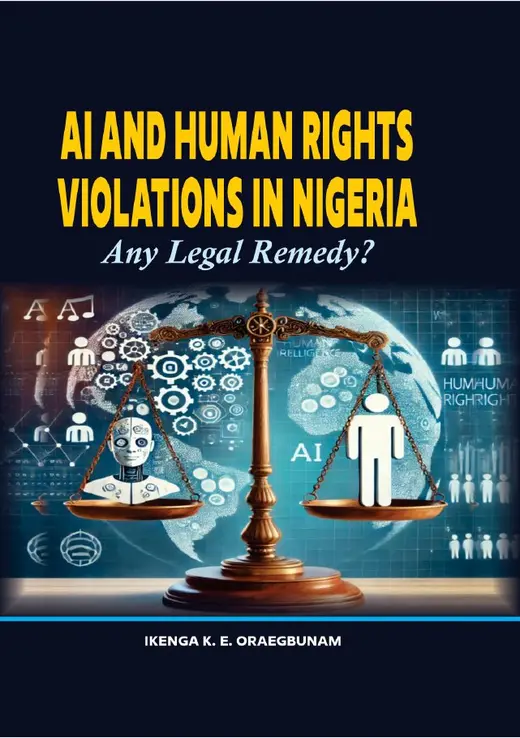
Opening the monograph…

Technology, Cyber & AI
The Law, Digitization and Corporate Governance in Nigeria
About the monograph
This study examines the intersection of law and digitization in corporate governance practices in Nigeria. It recognizes that corporate governance, a system by which corporations are directed and controlled, has traditionally been dominated by analog processes of board meetings, shareholder engagements, and regulatory reporting. However, digital technologies such as electronic board portals, virtual meetings, automated compliance systems, and online reporting have transformed how governance duties are discharged, how stakeholders engage with corporations, and how regulators monitor compliance. The study critically analyzes the Nigerian legal framework, notably the Companies and Allied Matters Act 2020 (CAMA 2020), the Nigerian Code of Corporate Governance and related Securities and Exchange Commission (SEC) guidelines, vis-a-vis the challenges and opportunities brought by digitization. It highlights legal gaps in digital governance, evaluates strengths and weaknesses, and makes recommendations for enhancing digital governance frameworks, including data protection, cybersecurity, and regulatory adaptation. Doctrinal analysis suggests that while digitization can improve transparency, accountability, and stakeholder engagement, it also presents risks, including cybersecurity threats and a lack of clear legal guidance on digital practices. The study concludes that achieving effective corporate governance in the digital age in Nigeria requires legal reform, institutional capacity building, and harmonized regulatory oversight.
Cite this book
Ikenga K. E. Oraegbunam, The Law, Digitization and Corporate Governance in Nigeria (TETFund Academic Publishing Centre, Nnamdi Azikiwe University, 2026), ISBN 978-978-8590-40-8.
Free preview
First 4 pagesLoading page…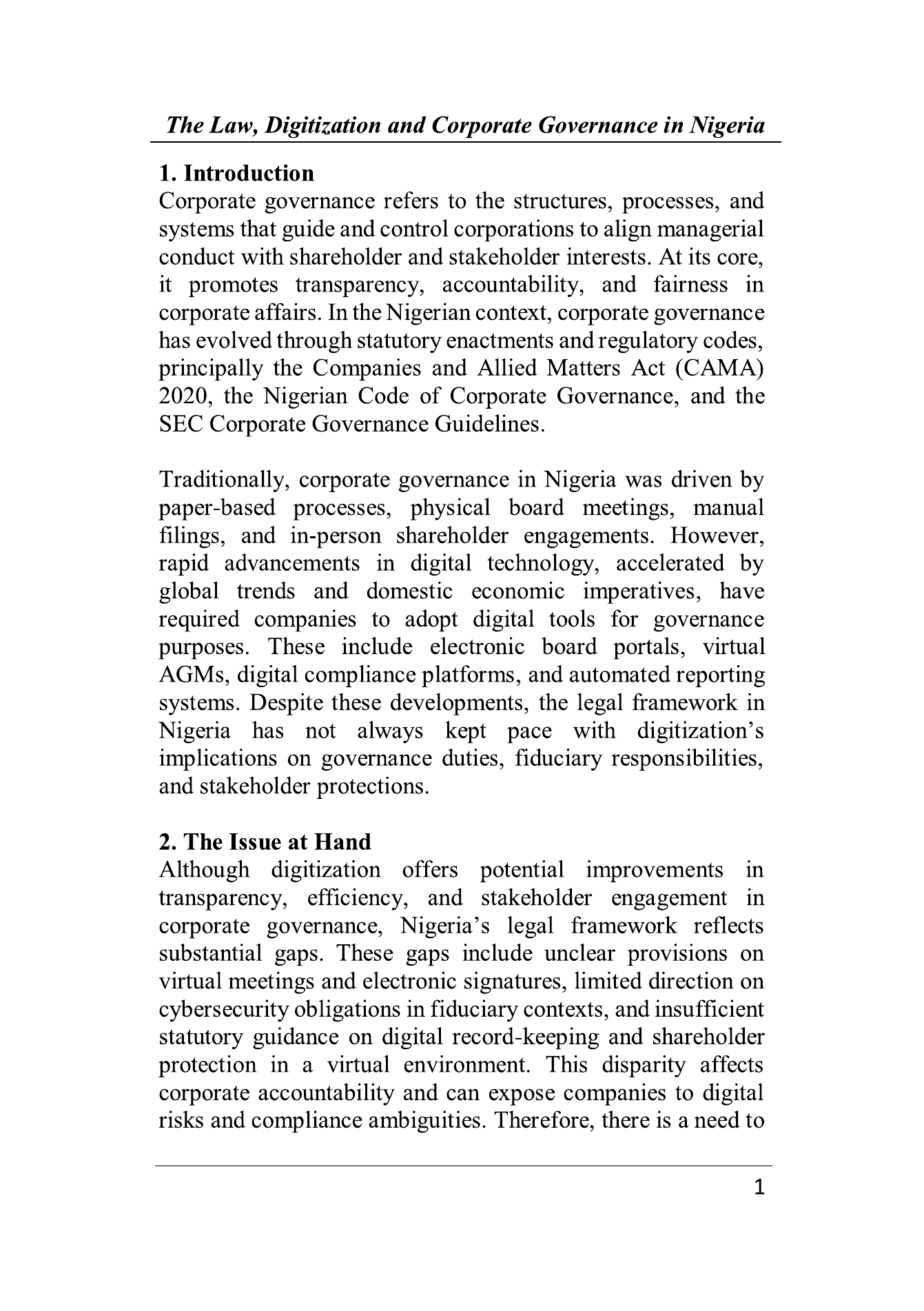
Loading page…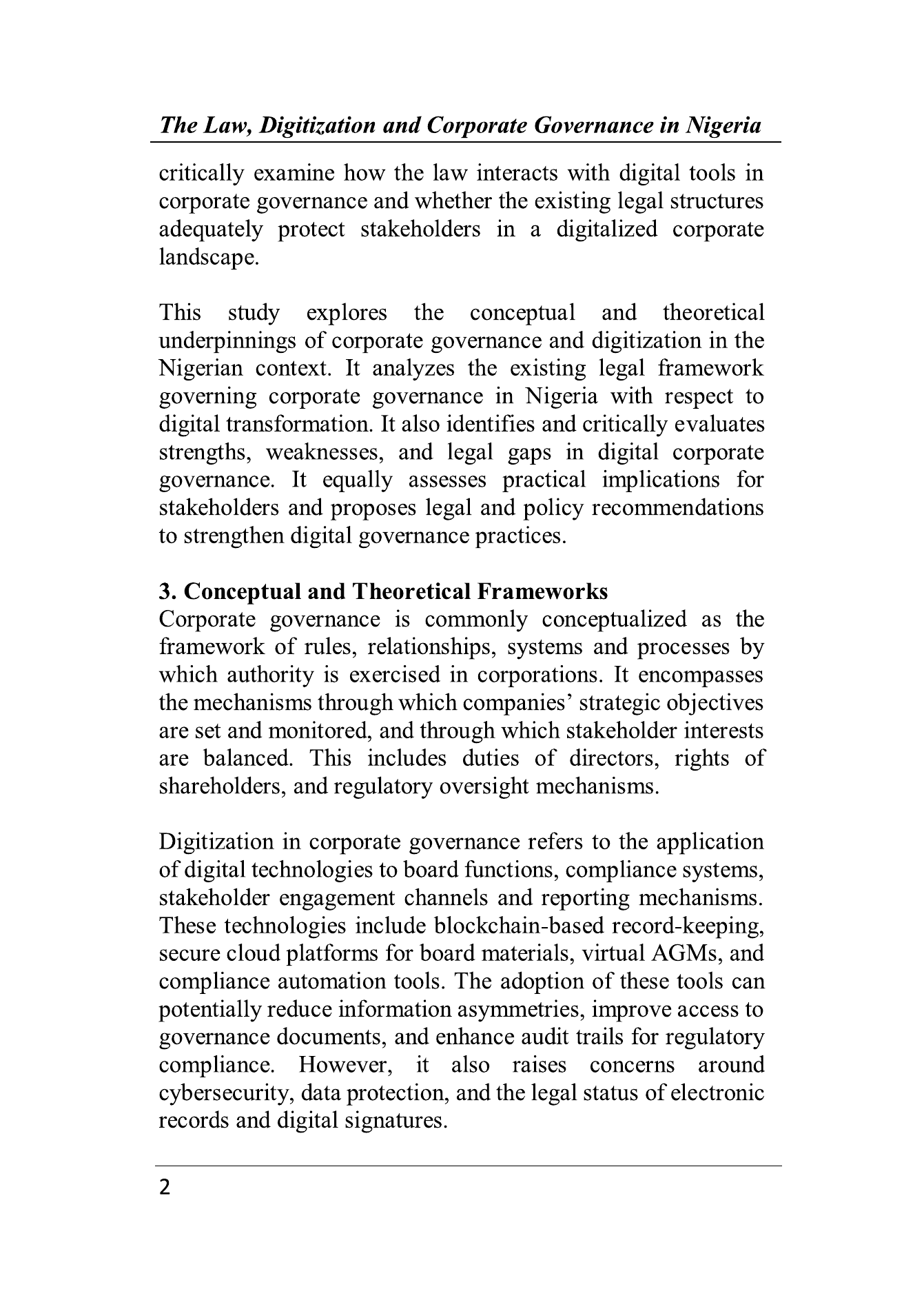
Loading page…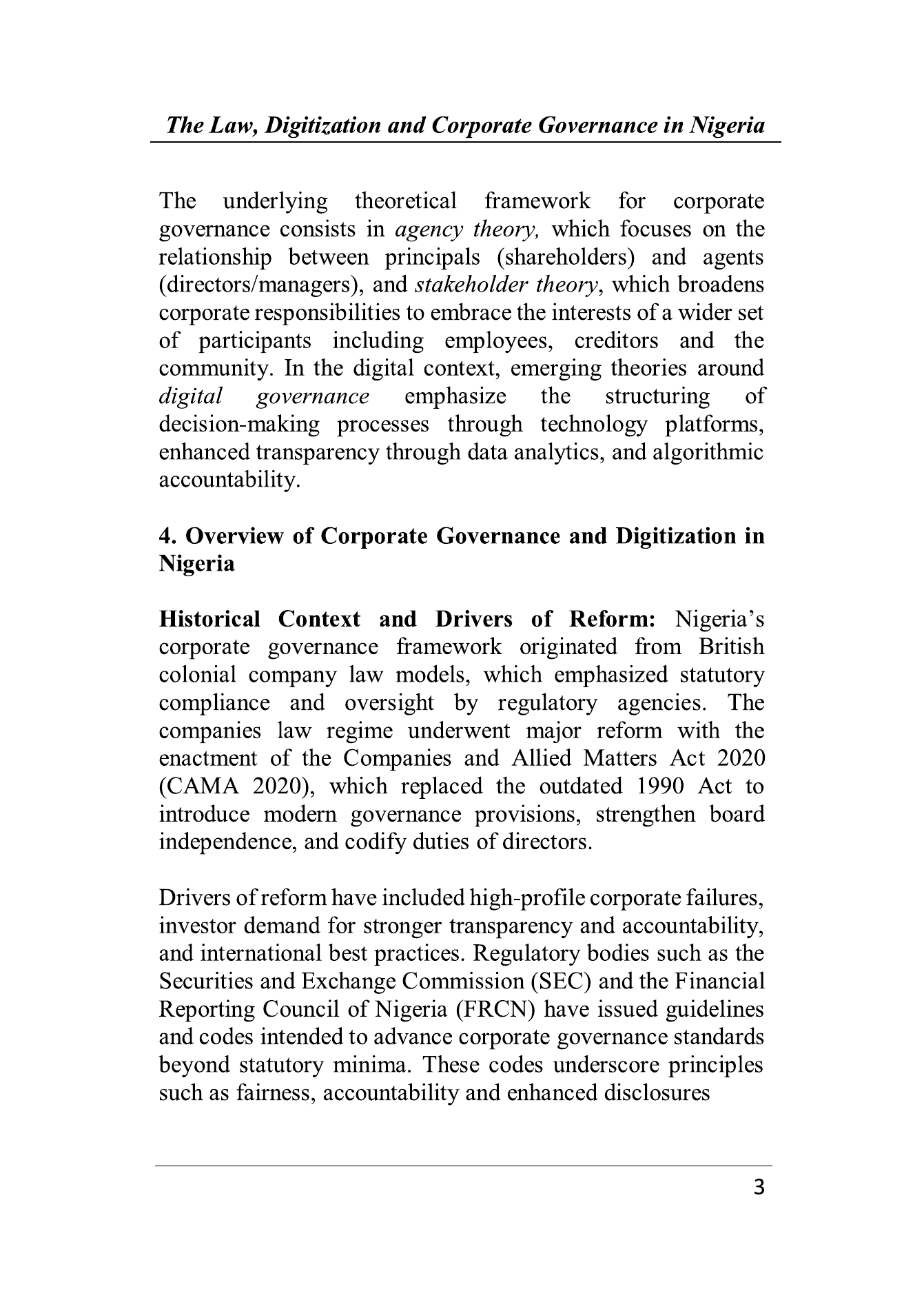
Loading page…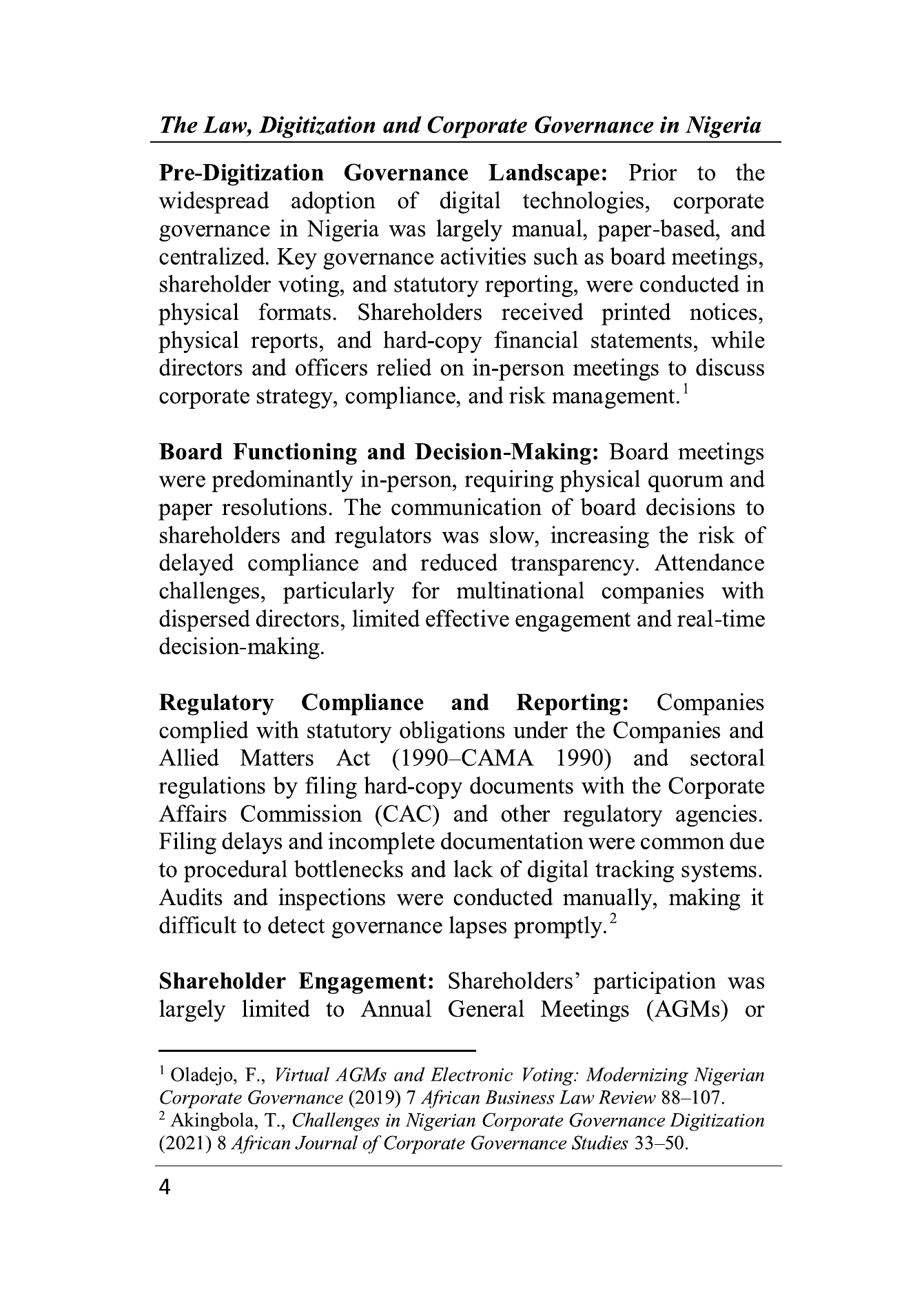
Keep reading
That was the free preview. 31 more pages in the full monograph, yours as a PDF for ₦7,000.